


Informational Blog
he excitement around the OTP Group Tashkent Grand Slam 2026 continues to build as the World Judo Tour moves into its decisive stages. Scheduled from 27 February to 1 March 2026 in Tashkent, Uzbekistan, the event brings together elite judoka from across the globe for one of the most important competitions early in the season.
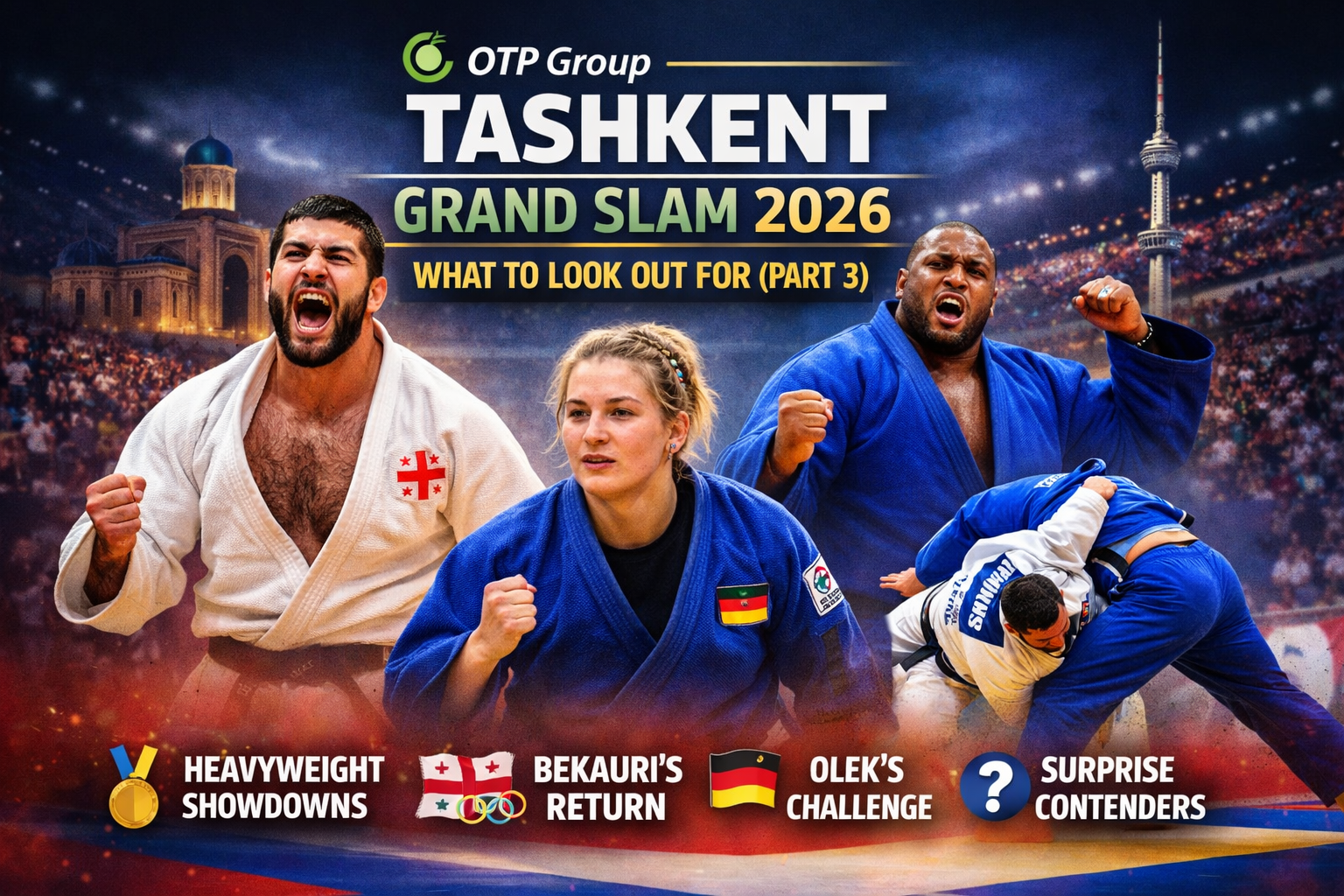
Part 3 of the preview focuses on Day Three, where the heavyweight divisions and upper weight categories promise explosive action, tactical battles, and potential surprises. Let’s break down what fans, coaches, and athletes should watch closely.
Event Overview
The Tashkent Grand Slam is the second stop of the 2026 IJF World Judo Tour, attracting hundreds of competitors and offering crucial ranking points.
- 📍 Location: Tashkent, Uzbekistan
- 📅 Dates: 27 Feb – 1 Mar 2026
- 👥 Participants: 370 judoka from 39 countries
- 🎯 Importance: Major ranking points toward Olympic qualification
Grand Slam events are among the most prestigious IJF competitions, often shaping world rankings and future seeding.
Day Three Spotlight Categories
According to the IJF preview, five weight divisions will headline the final day:
- Men: −90 kg, −100 kg, +100 kg
- Women: −78 kg, +78 kg
These categories traditionally produce dramatic contests due to the blend of power, technique, and tactical maturity.
Men’s −90 kg: Bekauri Leads a Stacked Field
One of the biggest attractions in Tashkent will be Lasha Bekauri (GEO). The double Olympic champion returns to Grand Slam action with eyes already set on a potential third Olympic title in Los Angeles.
Key Contenders
- Lasha Bekauri (GEO) – The clear headline name
- Rafael Macedo (BRA) – Lima Grand Prix 2025 winner
- Theodoros Tselidis (GRE) – Olympic bronze medallist seeking redemption
Bekauri’s presence automatically raises the competitive level. Whenever he steps on the tatami, expectations are sky-high, and opponents know they must produce their absolute best.
What to watch:
- Bekauri’s form early in the season
- Whether Macedo can convert confidence into gold
- Possible breakthrough athletes from the deep field
This category could easily produce one of the tournament’s most technical finals.
Women’s −78 kg: A Rare Open Opportunity
The −78 kg division appears unusually open this time. While some dominant names are missing, the field remains highly competitive.
Athlete to Watch
- Anna Monta Olek (GER) – Recently third in Paris and entering as favourite
- Kaila Issoufi (FRA) – Rising French talent and double Grand Slam medallist
Olek’s recent podium finish gives her strong momentum, but the absence of certain top stars means the division is ripe for surprises.
What to watch:
- Can Olek seize the moment and dominate?
- Will Issoufi represent the next French breakthrough?
- Possibility of dark horses reaching the podium
This category could deliver unexpected finalists.
Men’s −100 kg and +100 kg: Heavyweight Fireworks
Although Part 3 highlights mainly the −90 kg and −78 kg divisions in detail, the heavyweight men’s categories traditionally bring the most explosive ippons.
Why These Divisions Matter
- Matches often end suddenly with powerful throws
- Grip fighting becomes decisive
- Tactical patience is critical
With Olympic cycles always in mind, many heavyweights use early-season Grand Slams to establish ranking momentum.
What to watch:
- New generation heavyweights emerging
- Veterans defending their status
- Potential all-ippon highlight reels
Women’s +78 kg: Power Meets Strategy
The women’s heavyweight division closes the event and typically delivers dramatic finals. These contests combine raw strength with refined technique and often produce memorable moments.
Key dynamics:
- Experience vs youth battles
- Grip dominance strategies
- High-impact throws in golden score
Fans should expect intense and tactical matches in this category.
Why Tashkent Matters on the World Tour
Tashkent has become one of the most dynamic stops on the IJF circuit. The city consistently attracts elite competitors and strong local support.
For athletes, this Grand Slam is important because:
- ✅ Valuable world ranking points
- ✅ Early-season momentum
- ✅ Psychological edge before major championships
- ✅ Step toward Olympic qualification
With the Paris season opener already completed, performances in Tashkent will help shape the competitive narrative for 2026.
Final Thoughts
The OTP Group Tashkent Grand Slam 2026 is set for a thrilling conclusion on Day Three. With Olympic champions, rising stars, and hungry challengers all in the mix, the final day promises:
- 🔥 High-level tactical judo
- 💥 Heavyweight power clashes
- ⭐ Potential breakout performances
- 🏆 Crucial ranking implications
All eyes will be on Lasha Bekauri and Anna Monta Olek, but as history shows, Grand Slam events often produce surprise heroes.
For coaches, athletes, and martial arts enthusiasts worldwide, Tashkent is once again the place where the future of elite judo begins to take shape.












Leave a Reply