


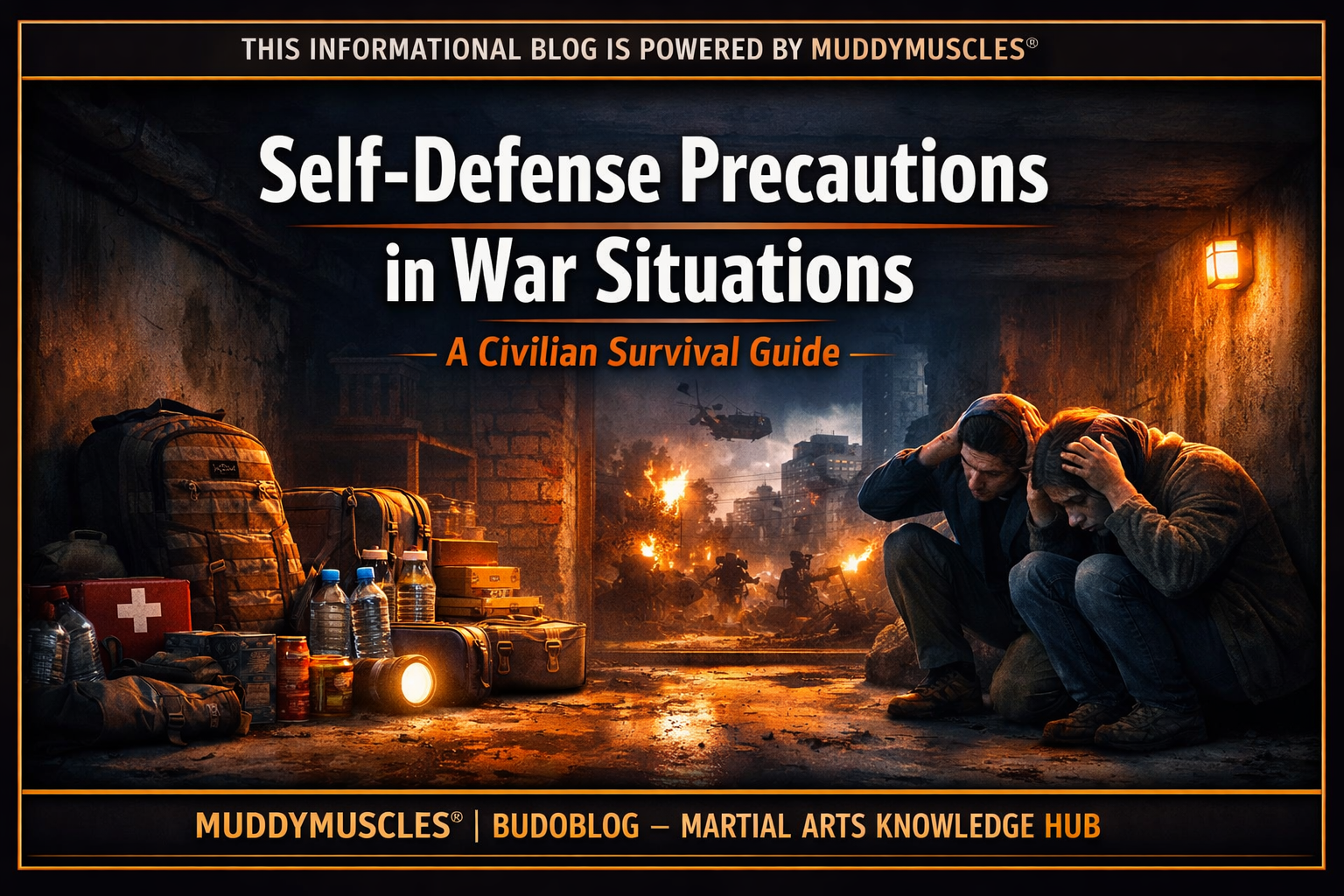
Civilian Survival Guide furing WAR
War situations are among the most dangerous environments civilians can face. Unlike soldiers, ordinary people are often unprepared for sudden violence, infrastructure collapse, and mass panic. In such situations, self-defense does not mean fighting an enemy, but rather protecting yourself and your family through awareness, preparation, and smart decision-making.
Understanding basic civilian survival precautions can significantly reduce risk and improve the chances of staying safe during armed conflict. This guide outlines practical self-defense strategies civilians should know during war or large-scale conflict situations.
Understanding Civilian Self-Defense in War
In martial arts philosophy, especially in traditional systems such as Karate, the first principle of defense is avoidance of danger. The same principle applies to war zones. Survival depends on:
- Awareness
- Quick decision-making
- Proper shelter
- Prepared emergency supplies
- Communication with family and authorities
The goal is always to stay alive, avoid exposure to violence, and reach safety.
1. Situational Awareness
The most powerful self-defense skill during conflict is situational awareness.
Civilians must stay informed about developing conditions around them. Modern conflicts often involve sudden missile strikes, drone attacks, or urban combat.
Practical precautions
- Follow official government alerts, radio broadcasts, and emergency notifications.
- Identify safe shelters, hospitals, and evacuation routes near your location.
- Avoid strategic or military locations such as:
- Airports
- Bridges
- Military bases
- Government buildings
- Communication towers
These locations are often targeted during attacks.
Always remain alert to unusual signs such as sirens, explosions, abandoned vehicles, or suspicious objects.
Stay Informed and Avoid High-Risk Locations
In any conflict or war-like situation, one of the most important survival strategies for civilians is to remain informed through reliable and official communication channels. Governments and emergency management agencies typically issue alerts and instructions through radio broadcasts, television announcements, mobile emergency alerts, and official social media channels. These updates provide critical information about air raid warnings, evacuation orders, curfews, or safe zones. Keeping a battery-powered radio or a fully charged mobile phone can help you stay connected even if normal communication networks are disrupted.
In addition to staying informed, it is essential to identify safe shelters and emergency facilities in advance. Civilians should know the nearest public shelters, hospitals, underground structures, and evacuation routes available in their area. Planning these routes ahead of time helps families react quickly during emergencies without confusion or panic. If possible, households should also discuss and establish a family emergency plan, including a meeting point in case members become separated.
Equally important is the need to avoid locations that may become potential military targets during conflict. Strategic infrastructure often becomes a focus during attacks, which makes nearby areas extremely dangerous for civilians.
2. Finding Immediate Shelter
During bombing or artillery attacks, the first few minutes are critical.
Safe shelter locations
- Underground bunkers
- Basements
- Subway stations
- Reinforced concrete buildings
Safety rules
- Stay away from windows and glass surfaces.
- Lie flat on the ground if explosions occur nearby.
- Protect your head and neck using bags, helmets, or thick clothing.
- If outdoors, take cover in ditches, trenches, or behind solid structures.
During bombing, missile strikes, or artillery attacks, the first few minutes are extremely critical. Quick thinking and immediate action can significantly reduce the risk of injury or death. The primary objective during such situations is to move to the safest available shelter as quickly as possible and remain protected until the danger passes. Panic or hesitation can lead to exposure in open areas where flying debris, shockwaves, and collapsing structures pose serious threats.
The safest locations during attacks are underground or reinforced structures that can provide protection from explosions and falling debris. Examples of such shelters include underground bunkers, basements of buildings, subway or metro stations, and reinforced concrete structures. These places are designed or naturally structured to absorb shockwaves and provide better protection compared to open spaces or light buildings. If you are inside a building when an attack occurs, it is advisable to move to the lowest floor or basement area, preferably away from windows and external walls.
Another important safety rule is to stay away from glass surfaces such as windows, doors, or large mirrors, as explosions can cause glass to shatter violently and turn into dangerous flying fragments. Interior rooms, corridors, stairwells, or structural pillars often provide better protection than rooms facing the outside.
If an explosion occurs nearby and there is no time to reach a shelter, individuals should immediately lie flat on the ground, preferably face down, to reduce exposure to blast waves and debris. Protecting vital parts of the body is crucial in such moments. The head and neck should be covered using backpacks, helmets, thick clothing, or even arms, as these areas are particularly vulnerable to injury.
When outdoors, it is important to quickly identify natural or structural cover. Ditches, trenches, roadside depressions, large rocks, thick walls, or the base of solid structures can provide temporary protection. Avoid standing near vehicles, fuel stations, glass buildings, or unstable structures that may collapse during explosions.
Remaining calm and following these sheltering principles can greatly improve survival chances during sudden attacks. The key idea is simple: seek strong cover, stay low, protect your head, and avoid exposed areas until the situation becomes safe again.
Concrete saves lives. Glass kills.
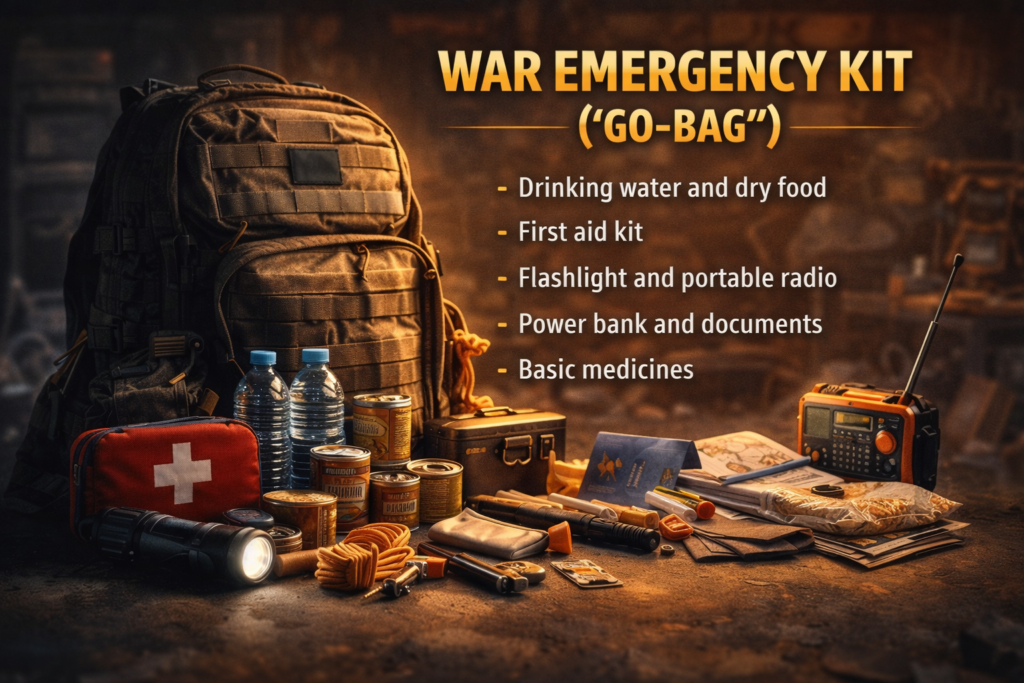
3. Prepare a War Emergency Kit (Go-Bag)
Prepared families have a much higher chance of survival.
Every household should maintain an emergency survival bag ready for evacuation.
Essential items
- Drinking water (minimum 3 days supply)
- Dry food or energy bars
- Flashlight and spare batteries
- Portable radio
- Power bank
- First aid kit
- Important documents (ID, passport, medical records)
- Basic medicines
- Multi-tool or survival knife
- Warm clothing and blankets
Keep this bag in an easily accessible place so that evacuation can happen quickly.
In times of conflict or emergency evacuation, having a prepared emergency kit—commonly called a “Go-Bag”—can make a critical difference in survival and safety. A Go-Bag is a portable bag containing essential items that allow individuals or families to leave quickly and survive independently for at least 48 to 72 hours. In many war or disaster situations, people may have only a few minutes to evacuate their homes, and gathering necessary supplies at the last moment may not be possible. Preparing a ready-to-carry emergency bag ensures that you can move quickly while still having access to vital resources.
A proper Go-Bag should contain the most essential items needed for basic survival, communication, and medical care. Drinking water is one of the most important items; experts generally recommend at least three days’ supply of water per person. Non-perishable food such as energy bars, dry fruits, canned foods, or ready-to-eat meals should also be included. These foods should require little or no cooking and have a long shelf life.
Medical supplies are equally important. A well-equipped first aid kit should include bandages, antiseptic solution, pain relief medication, gloves, and any personal prescription medicines required by family members. In emergencies where medical services may be delayed, basic first aid supplies can help treat minor injuries and prevent infections.
Lighting and communication tools are also essential components of a Go-Bag. A flashlight with spare batteries, a portable battery-powered or hand-crank radio, and a power bank for charging mobile phones help individuals stay informed and navigate safely during power outages. In many conflict situations, electricity and communication networks may be disrupted, making these tools extremely valuable.
Another important element of the emergency kit is documentation and personal identification. Copies of important documents such as passports, identity cards, medical records, insurance papers, and emergency contact numbers should be stored in waterproof covers or sealed plastic pouches. These documents may be required when seeking assistance, crossing checkpoints, or accessing relief services.
Additional useful items include warm clothing, a blanket or emergency thermal sheet, hygiene supplies, a whistle for signaling help, a multi-tool or utility knife, and basic personal items. Families with children, elderly members, or pets should also include special items suited to their needs.
The Go-Bag should be stored in an easily accessible location near the main exit of the house so that it can be grabbed quickly during emergencies. It is also recommended to review and update the bag periodically to ensure that food, batteries, and medicines remain usable.
Preparing a War Emergency Kit in advance may seem like a small step, but in critical moments it can provide security, independence, and the ability to respond quickly during evacuation or crisis situations.
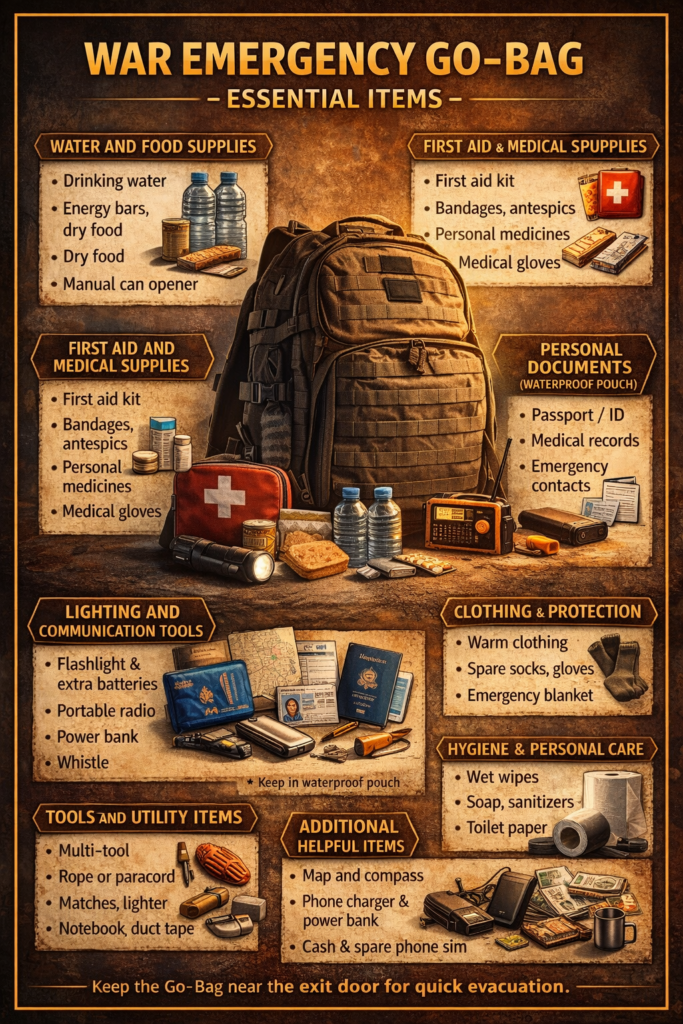
Essential Items for a War Emergency Kit (Go-Bag)
1. Water and Food Supplies
- Drinking water (minimum 3 days supply per person)
- Energy bars or protein bars
- Dry fruits and nuts
- Ready-to-eat meals or canned food
- Biscuits or high-calorie snacks
- Manual can opener
2. First Aid and Medical Supplies
- First aid kit
- Bandages and gauze
- Antiseptic solution or wipes
- Pain relief tablets
- Personal prescription medicines
- Medical gloves
- Thermometer
- Burn ointment
3. Lighting and Communication Tools
- Flashlight or torch
- Extra batteries
- Portable battery-powered radio
- Mobile phone charger
- Power bank
- Emergency whistle
4. Personal Documents
Keep these in a waterproof pouch:
- Passport
- National ID / Aadhaar card
- Medical records
- Insurance papers
- Emergency contact list
- Copies of important documents
5. Clothing and Protection
- Warm clothing
- Extra socks
- Raincoat or poncho
- Gloves
- Blanket or thermal emergency blanket
- Face masks
6. Hygiene and Personal Care
- Soap or sanitizer
- Toothbrush and toothpaste
- Wet wipes
- Toilet paper
- Sanitary products
- Small towel
7. Tools and Utility Items
- Multi-tool or Swiss knife
- Small rope or paracord
- Duct tape
- Lighter or waterproof matches
- Small notebook and pen
- Plastic bags
8. Additional Helpful Items
- Map of the local area
- Compass
- Small cooking utensil or metal cup
- Energy drink powder or electrolyte packets
- Spare phone SIM card
✅ Tip:
Keep the Go-Bag near the exit door so it can be picked up quickly during evacuation.
4. Evacuation Safety
Sometimes the safest option is leaving the area immediately.
Evacuation guidelines
- Follow official evacuation orders.
- Move quickly but calmly.
- Carry only essential items.
- Avoid crowded highways that may become targets.
- Use secondary routes if recommended by authorities.
Families should also decide in advance a meeting point in case members become separated.
During war or armed conflict, evacuation may become necessary when an area is no longer safe due to ongoing attacks, infrastructure damage, or military operations. In such situations, civilians should carefully follow official evacuation instructions issued by government authorities or emergency services. These instructions are designed to guide people toward safer zones while avoiding dangerous routes. When evacuation orders are announced, it is important to remain calm, gather your prepared emergency kit, and move quickly but in an organized manner. Panic and disorder can create additional risks, especially in crowded evacuation areas.
Another important aspect of evacuation safety is planning and awareness of safe routes and alternative paths. Major highways or main transportation routes may become congested or targeted during conflicts, so authorities often recommend specific evacuation corridors or secondary roads. Families should try to stay together during evacuation and keep communication devices charged in order to remain connected with relatives or emergency services. If traveling by vehicle, keep fuel levels sufficient and carry basic supplies such as water, food, and a map in case navigation systems fail. By staying alert, following official guidance, and avoiding unnecessary risks, civilians can greatly increase their chances of reaching a safe location during an evacuation.
5. Protection from Gunfire
Urban warfare often involves sudden gunfire.
Immediate response
- Drop to the ground immediately.
- Crawl toward solid cover such as:
- Concrete walls
- Thick trees
- Engine blocks of vehicles
- Stay low and silent.
It is important to understand the difference between:
Cover: stops bullets
Concealment: only hides you
Thin objects such as wooden doors or furniture do not stop bullets.
In areas affected by armed conflict, civilians may unexpectedly find themselves near gunfire or active shooting. In such situations, the most important action is to react quickly and reduce exposure. If gunfire is heard nearby, immediately drop to the ground and stay as low as possible. Standing or running upright can make a person more visible and vulnerable. Instead, move carefully while staying low and try to reach solid cover such as thick concrete walls, large trees, heavy vehicles, or strong building structures. These types of barriers can help block bullets and reduce the risk of injury. It is important to stay calm and avoid sudden movements that could draw attention.
Another key principle to understand during gunfire situations is the difference between cover and concealment. Cover refers to objects that can actually stop or block bullets, such as reinforced walls, engine blocks of vehicles, or thick earth embankments. Concealment, on the other hand, only hides a person from view but does not stop bullets. Objects such as wooden doors, thin walls, bushes, or furniture may provide concealment but offer very little real protection. When seeking safety, always prioritize solid cover rather than simply hiding. Once a safe position is found, remain still, avoid exposing yourself unnecessarily, and wait until the situation becomes secure before attempting to move again.
6. Family Communication Plan
Communication networks often collapse during conflicts.
Families should prepare a simple communication strategy.
Important steps
- Memorize key phone numbers.
- Keep phones fully charged.
- Carry power banks.
- Decide a secondary meeting point outside the conflict zone.
- Use text messages when calls fail.
Short messages often work even when phone networks are overloaded.
In emergency or war situations, communication systems such as mobile networks and internet services may become unreliable or completely unavailable. Therefore, families should establish a clear communication plan in advance so that members know what to do if they become separated. Each family member should memorize important phone numbers and keep a written list of emergency contacts in their emergency kit. It is also helpful to decide on a primary and secondary meeting location, such as a nearby safe shelter, relative’s house, or community center, where family members can gather if communication fails.
Families should also make use of multiple communication methods to stay connected. Text messages or messaging apps often work better than voice calls during network congestion, as they require less bandwidth. Keeping mobile phones fully charged and carrying a power bank can ensure that devices remain usable during long emergencies. In addition, informing trusted relatives or friends outside the conflict area about your situation can help maintain contact and provide support if needed. A well-planned family communication strategy can greatly reduce confusion and anxiety during crises and help ensure that everyone can reconnect safely.
7. Basic First Aid Knowledge
Medical assistance may not arrive quickly during war situations.
Basic first aid knowledge can save lives.
Important skills
- Controlling heavy bleeding
- Bandaging wounds
- Treating burns
- Performing CPR
- Managing shock
Stopping severe bleeding within minutes can prevent death in many injuries.
In war or conflict situations, access to hospitals and medical services may become limited due to damaged infrastructure, overwhelmed healthcare facilities, or unsafe travel conditions. For this reason, having basic first aid knowledge is extremely important for civilians. Understanding how to respond to injuries can help stabilize a person’s condition until professional medical assistance becomes available. Simple actions such as cleaning wounds, applying bandages, or controlling bleeding can prevent infections and save lives during emergencies.
One of the most critical first aid skills is the ability to control severe bleeding, which is a common cause of death in traumatic injuries. Applying firm pressure to the wound using a clean cloth, bandage, or dressing can help slow or stop bleeding. If possible, elevating the injured area above the level of the heart may also reduce blood flow. In addition to bleeding control, civilians should learn how to treat burns, fractures, and shock, which are common injuries during explosions or building collapses. Basic knowledge of CPR (Cardiopulmonary Resuscitation) can also be life-saving if someone stops breathing or loses consciousness.
It is also important to remain calm while providing first aid. Panic can make it difficult to think clearly and provide effective help. A well-prepared first aid kit containing bandages, antiseptic wipes, gloves, and basic medicines can greatly assist in managing injuries during emergencies. By learning and practicing basic first aid skills, individuals can help protect not only themselves but also family members and others who may need assistance during crisis situations.
8. Information and Cyber Awareness
Modern conflicts include information warfare and misinformation.
False messages can cause panic or mislead civilians.
Safety tips
- Trust official announcements only.
- Avoid spreading unverified social media messages.
- Disable location sharing in dangerous areas.
- Protect personal data online.
Remaining calm and informed helps avoid unnecessary panic.
In modern conflicts, information plays a powerful role, and wars are often accompanied by information warfare and cyber threats. False news, misleading messages, and propaganda can spread rapidly through social media platforms, messaging apps, and unofficial websites. Such misinformation can create unnecessary panic, confusion, or even lead civilians into dangerous situations. Therefore, it is essential for individuals to verify information carefully before believing or sharing it. Reliable information should always come from official government announcements, verified news organizations, or emergency management authorities.
Civilians should also practice basic cyber safety during crisis situations. Avoid sharing sensitive personal information such as your exact location, travel plans, or details about shelters on public platforms, as such information could potentially be misused. It is also wise to disable automatic location sharing on social media apps during emergencies. In addition, people should be cautious about suspicious links, fake donation campaigns, or unknown messages that may appear during crisis periods. By staying alert and relying on trusted sources of information, civilians can protect themselves from misinformation and make better decisions during difficult and uncertain situations.
9. Personal Security and Crime Awareness
War zones often experience increased crime, looting, and violence.
Self-protection strategies
- Move in groups whenever possible.
- Avoid traveling alone at night.
- Keep valuables hidden.
- Stay alert in crowded shelters or refugee camps.
Personal awareness becomes extremely important when law enforcement is overwhelmed.
During war or large-scale emergencies, the breakdown of normal law enforcement systems and public order can sometimes lead to an increase in crime, looting, and opportunistic violence. When people are forced to evacuate or gather in temporary shelters, criminals may take advantage of the confusion and vulnerability of civilians. For this reason, individuals and families must remain alert and cautious about their surroundings. It is generally safer to move in small groups rather than alone, especially when traveling through unfamiliar or poorly secured areas. Staying with trusted people can provide both physical safety and emotional support during stressful situations.
Another important precaution is to avoid displaying valuables or carrying large amounts of cash, as this may attract unwanted attention. Personal belongings such as money, important documents, and electronic devices should be kept secure and discreet. When staying in crowded locations like shelters, camps, or evacuation centers, individuals should keep their bags and emergency kits close to them and remain aware of suspicious behavior. Simple habits such as locking doors when possible, maintaining awareness of entry and exit points, and cooperating with local authorities or community volunteers can greatly improve personal safety. By staying vigilant and making cautious decisions, civilians can reduce the risk of becoming victims of crime during unstable situations.
10. Mental and Emotional Preparedness
Fear and panic can be as dangerous as physical threats.
Maintaining mental control helps people make better decisions.
Helpful practices
- Stay calm and breathe slowly.
- Support children and elderly family members.
- Maintain routines where possible.
- Focus on practical actions instead of panic.
In martial arts philosophy, mental discipline is a key part of survival.
ental and Emotional Preparedness
In war or crisis situations, mental strength and emotional stability are just as important as physical safety. Sudden violence, uncertainty, displacement, and loss of normal daily routines can create intense fear, anxiety, and stress for civilians. Maintaining mental calmness and emotional balance helps individuals think clearly and make better decisions during emergencies. Panic can lead to poor judgment, confusion, and dangerous actions, while a calm mindset allows people to respond more effectively to changing situations.
Families should also pay special attention to the emotional well-being of children, elderly individuals, and vulnerable family members during times of conflict. Children may feel frightened or confused by loud noises, sudden evacuations, or unfamiliar environments. Offering reassurance, maintaining communication, and creating a sense of safety can help reduce their fear. Simple routines such as regular meals, rest, and conversation can also help maintain emotional stability even in difficult circumstances.
Another important aspect of mental preparedness is developing resilience and a positive mindset. Focusing on practical steps—such as staying informed, preparing emergency supplies, and supporting one another—can provide a sense of control in uncertain situations. Practicing calm breathing, prayer, meditation, or other relaxation techniques can help manage stress and maintain mental clarity. When individuals remain emotionally steady and supportive of each other, families and communities become stronger and better equipped to face the challenges of crisis situations.
Key Survival Principle
Emergency experts often summarize survival priorities with four simple goals:
Stay Alive
Stay Safe
Stay Connected
Stay Informed
These principles guide civilian survival in conflict zones.
Final Thoughts
War situations are unpredictable and dangerous, but preparation and awareness greatly improve survival chances. Self-defense in such circumstances is not about combat; it is about protecting life, avoiding danger, and reaching safety.
The values taught in traditional martial arts—discipline, awareness, calmness, and quick decision-making—are equally valuable in real-life crisis situations. When people remain prepared and informed, they are better equipped to face even the most challenging circumstances.





Leave a Reply