


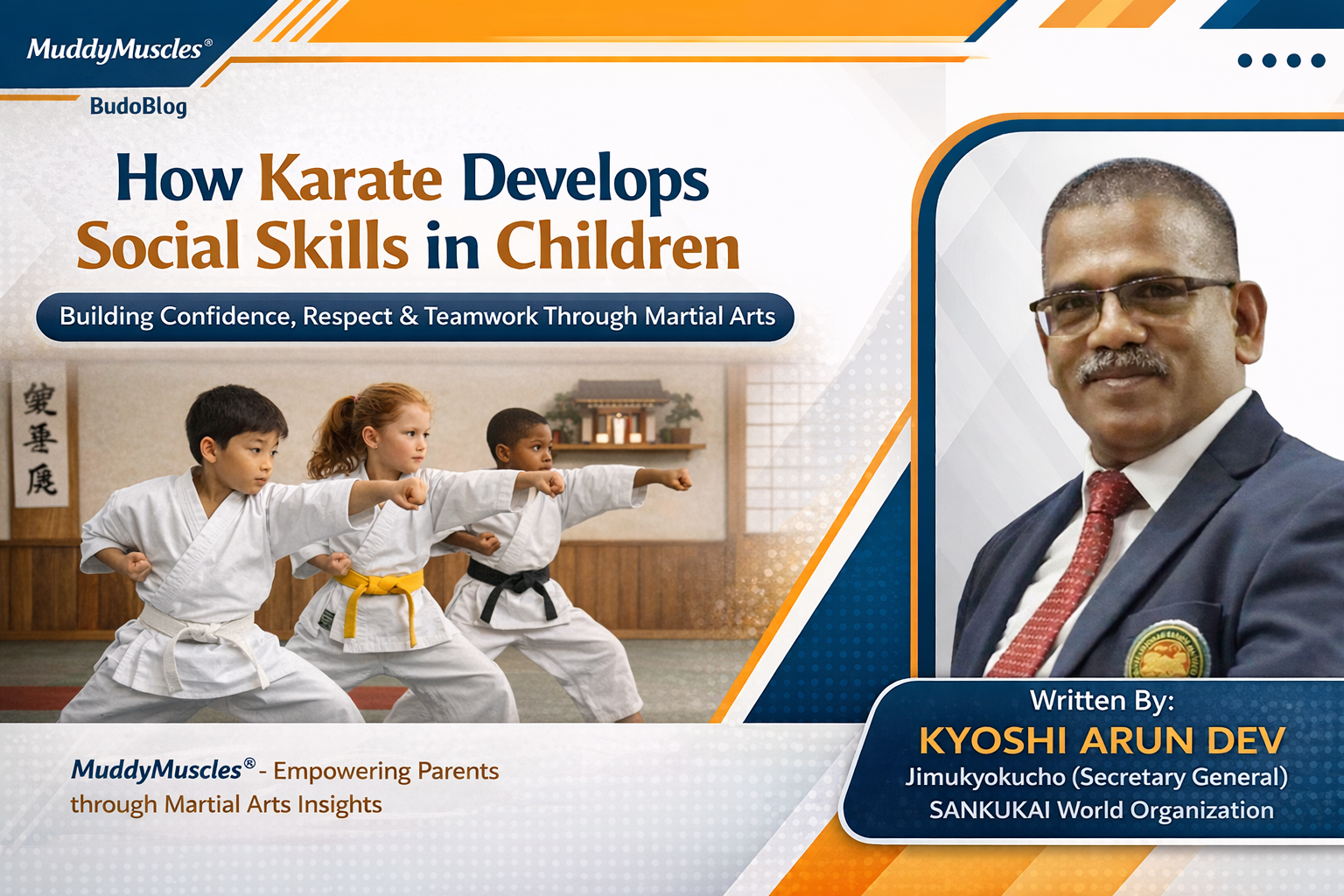
Karate is widely known for teaching self-defense, discipline, and physical fitness, but one of its most powerful benefits lies in an area that many parents initially overlook — social skill development.
In today’s world, children often spend more time with digital devices than interacting with people. As a result, many children struggle with communication, teamwork, confidence, and respectful behavior. Karate training offers a structured environment where children naturally develop these essential social dealing skills.
Through dojo etiquette, partner training, group exercises, and mentorship, Karate becomes a living classroom of social learning. Let us explore in detail how Karate training helps children build strong social skills that benefit them throughout life.
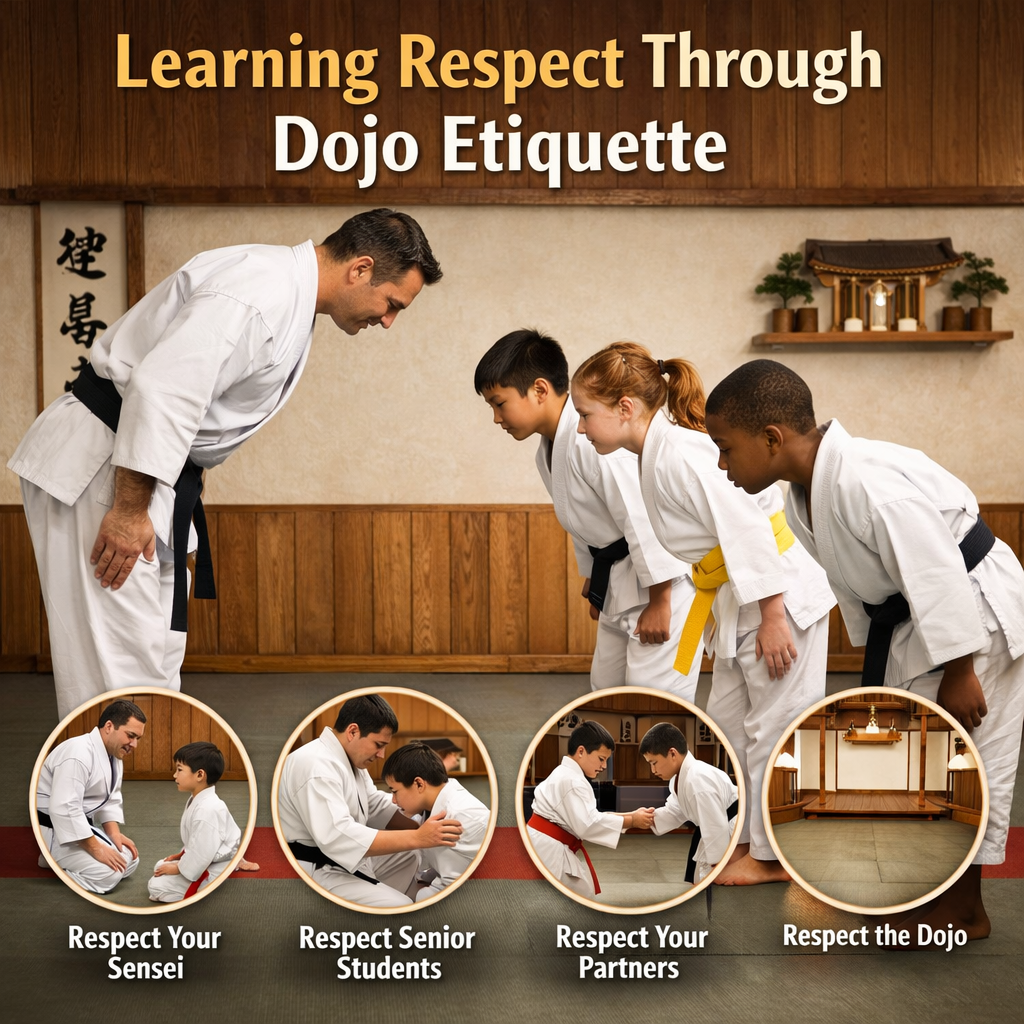
Learning Respect Through Dojo Etiquette
Respect is the foundation of traditional Karate training. Every class begins and ends with bowing (Rei) — a gesture that symbolizes humility and appreciation.
Children learn to show respect to:
- Their instructor (Sensei)
- Senior students
- Training partners
- The dojo environment
- The martial art itself
This consistent practice builds respectful behavior patterns that extend into everyday life. Children who practice Karate often become more polite at home, more attentive in school, and more respectful toward elders and teachers.
Respect in Karate is not taught only through words; it is practiced repeatedly through daily routines, making it a natural part of a child’s personality.
Communication Skills Develop Naturally
Karate training involves constant interaction between students.
Children regularly:
- Ask questions about techniques
- Listen carefully to instructions
- Practice drills with partners
- Encourage classmates during difficult exercises
Through these interactions, children learn clear communication and active listening. They become more comfortable expressing themselves and responding respectfully to others.
For shy children especially, Karate training often becomes a safe social space where they gradually gain the confidence to speak, interact, and participate.
Learning Discipline and Social Responsibility
Karate training follows a clear structure. Students must:
- Line up properly according to rank
- Wait patiently for their turn
- Follow instructor commands
- Maintain discipline during class
These practices teach children self-control and responsibility, which are essential for healthy social relationships.
Instead of interrupting or acting impulsively, children learn to observe, listen, and respond appropriately.
This discipline translates into better behavior in classrooms, at home, and in public spaces.
Teamwork and Cooperation
Although Karate is often seen as an individual martial art, training is deeply rooted in group interaction and cooperation.
Many training activities require teamwork:
- Group warm-up exercises
- Partner drills
- Group kata practice
- Team-based games and activities
- Training camps and seminars
Through these experiences, children develop an understanding of working together toward a common goal.
They learn that success in training is not only about individual strength but also about supporting and learning from others.
Emotional Intelligence and Self-Control
One of the most valuable social skills children gain from Karate is emotional control.
During training, children experience:
- Challenging physical exercises
- Corrections from instructors
- Success and failure in competitions
- The pressure of belt examinations
These experiences teach them to:
- Stay calm under pressure
- Accept constructive criticism
- Manage frustration
- Celebrate achievements humbly
Over time, children develop emotional maturity, which improves how they interact with peers and authority figures.
Leadership Skills Develop Gradually
As children progress through belt ranks, their role in the dojo changes.
Senior students are often encouraged to:
- Assist junior students
- Demonstrate techniques
- Help maintain discipline in class
- Lead warm-up exercises
This process helps develop leadership and mentoring abilities.
Children begin to understand the responsibility of guiding others while maintaining humility and respect. These leadership skills are extremely valuable in school environments and later in professional life.
Bullying Prevention and Confidence
Many parents enroll their children in Karate to help them deal with bullying. While Karate teaches self-defense, its deeper impact lies in building confidence and awareness.
Karate training teaches children to:
- Maintain confident body language
- Stay calm in difficult situations
- Avoid unnecessary conflict
- Defend themselves responsibly when required
Children who train in martial arts often develop a strong presence and self-confidence, which naturally discourages bullying.
At the same time, Karate teaches students not to misuse their skills, promoting responsibility and ethical behavior.
Learning Humility Through Wins and Losses
In Karate, progress is measured through:
- Belt grading examinations
- Competitions and tournaments
- Technical evaluations
Children experience both success and failure.
Winning teaches them confidence, while losing teaches them humility and perseverance. This balanced exposure helps children understand that effort and continuous improvement are more important than immediate results.
Such lessons are crucial for developing healthy attitudes in social interactions.
Building a Sense of Community
A dojo is more than just a training hall — it is a community of learning and support.
Children form friendships with students of different ages and backgrounds. They learn to interact respectfully with seniors while caring for juniors.
Events such as:
- Belt ceremonies
- Martial arts camps
- Demonstrations
- Karate tournaments
create a strong sense of belonging.
Children begin to feel that they are part of a positive and disciplined community, which strengthens their social identity and confidence.
Character Development for Life
Traditional Karate emphasizes moral values that guide behavior both inside and outside the dojo.
These values include:
- Courtesy
- Integrity
- Perseverance
- Self-control
- Respect for others
When practiced consistently, these principles shape children into responsible, confident, and socially balanced individuals.
Karate therefore becomes not just a sport, but a complete system for character and social development.
In a rapidly changing world where children face increasing social challenges, Karate training offers a unique environment that combines discipline, respect, communication, and emotional development.
Through regular practice, children gradually develop the ability to:
- Communicate effectively
- Work cooperatively with others
- Manage emotions
- Respect authority and peers
- Show leadership and responsibility
These social dealing skills become valuable assets throughout their lives — in school, friendships, careers, and society.
For parents seeking a meaningful activity that supports both physical and personal development, Karate remains one of the most effective and time-tested choices.




Leave a Reply