


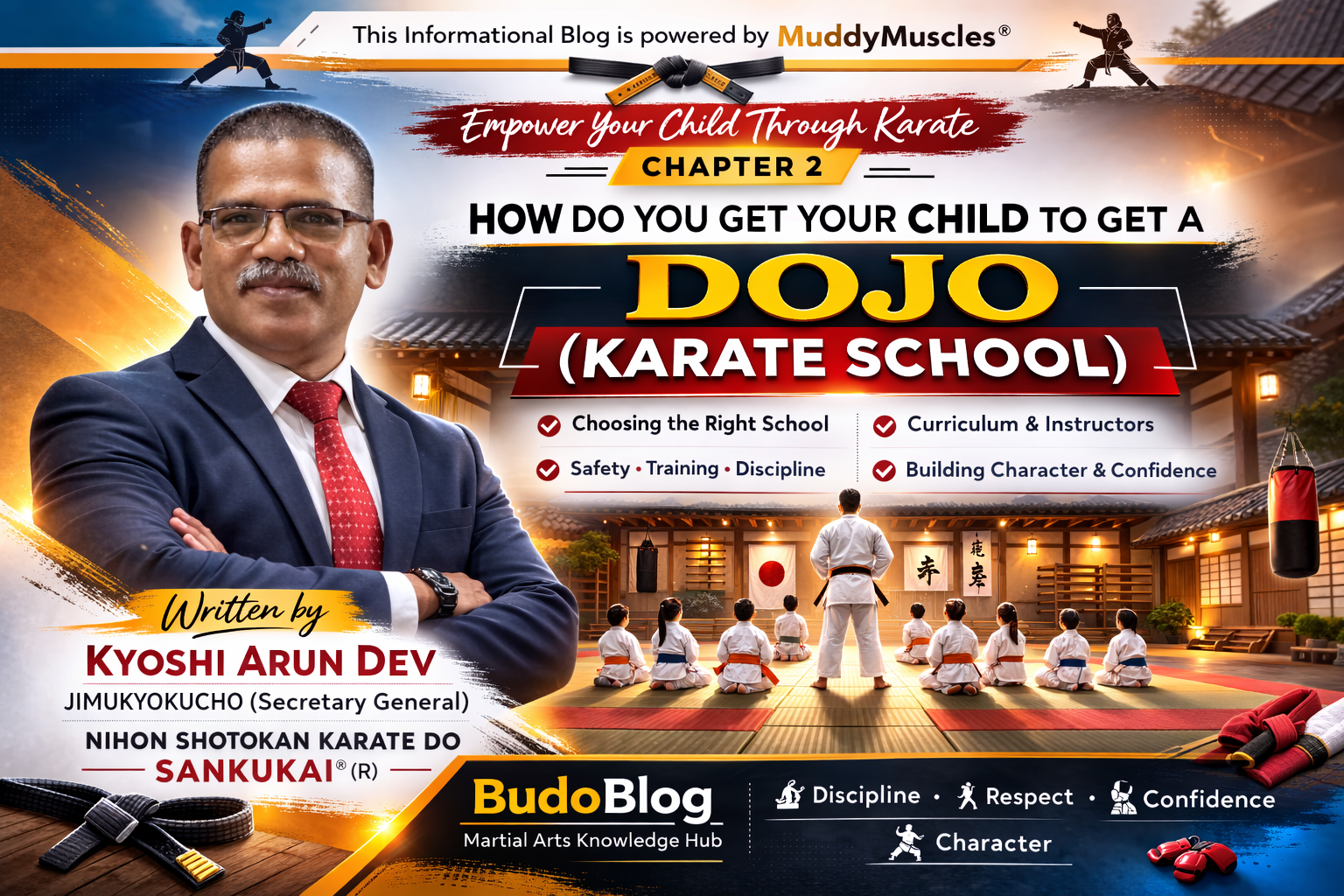
Empower Your Child Through Karate – Chapter 2
ARTICLE
Choosing the right Dojo (Karate School) for your child is one of the most important decisions parents make when introducing them to martial arts. Many parents make a quick decision simply because a neighbor or friend sends their child to a nearby karate class. However, this approach may not always lead to the best training environment.
Karate is not just a physical activity—it is a discipline that shapes character, respect, confidence, and life skills. Therefore, selecting the right dojo requires careful research and thoughtful consideration.
This chapter will guide parents through practical steps to help them choose the best training environment for their child.
1. Begin with Digital Research
The first step is online research. Today, parents can easily search for karate schools within their locality using the internet.
When researching dojos online:
- Look for schools in your area.
- Check their websites and social media pages.
- Read online reviews from students and parents.
However, remember that online reviews should not be the only deciding factor. Reviews can sometimes be biased or incomplete. They should only serve as a starting point for deeper research.
More importantly, parents should research:
- The background of the chief instructor
- The credentials of assistant instructors
- The history and reputation of the school
If possible, try to connect with parents whose children are already training there and ask about their experience.
2. Seek Personal Recommendations
Personal recommendations often provide the most reliable insights.
Ask friends, family members, or colleagues if they know reputable karate schools. Parents whose children are already enrolled in karate classes can provide valuable information such as:
- Teaching quality
- Discipline standards
- Instructor behavior
- Student progress
Such firsthand experiences can help you narrow down your choices.
3. Visit the Dojo Personally
Once you have a shortlist of potential schools, the next step is visiting the dojo in person.
Many dojos offer free trial classes or introductory sessions. Parents should take advantage of this opportunity.
During your visit, observe carefully:
- Class structure
- Instructor behavior
- Student discipline
- Safety standards
- Overall environment
It is highly recommended that parents stay with the child during the initial classes. This helps you understand how instructors interact with students and whether the teaching style suits your child.
4. Talk to the Instructors
A conversation with the instructor can reveal a lot about the school.
Ask questions such as:
- What are your qualifications?
- How many years have you been teaching?
- What is your teaching philosophy?
- How do you approach character development in children?
Karate training should focus not only on techniques but also on discipline, respect, patience, and personal growth.
If possible, conduct your own background research about the chief instructor and assistant instructors.
5. Check the Curriculum
A well-structured karate school should have a clear training curriculum.
Karate programs for children are usually divided into age-specific groups, ensuring that training is appropriate for their physical and mental development.
Ask about:
- What students learn at each belt level
- The grading system
- Training methods
- Character development programs
A good curriculum should balance:
- Physical training
- Discipline
- Confidence building
- Character education
6. Consider Class Timing and Schedule
Parents should also check whether the class schedule fits their child’s routine.
Consistency is essential in martial arts training. Therefore, choose a dojo that offers classes at convenient times so your child can attend regularly.
Key Factors Every Parent Must Evaluate
Instructor Certification
Verify whether the instructors hold valid certifications from recognized martial arts organizations.
Qualified instructors ensure that students learn proper techniques and maintain the authenticity of martial arts traditions.
Instructor Experience
Teaching children requires patience, understanding, and experience.
Instructors with many years of experience working with young students usually understand how to motivate, discipline, and guide children effectively.
Safety and Cleanliness
Safety Measures
The dojo must prioritize student safety. Look for:
- Proper training mats
- First aid equipment
- Safe training protocols
Cleanliness
The training environment should be clean and well maintained to ensure hygiene and safety for all students.
Student–Teacher Ratio
Smaller class sizes are generally better for children.
A lower student–teacher ratio ensures:
- Better supervision
- Individual attention
- Improved learning
Philosophy and Values
Different karate schools may follow different philosophies.
Parents should choose a dojo whose values align with their own beliefs about:
- Discipline
- Respect
- Character development
- Personal growth
Karate should help children grow into responsible and confident individuals.
Trial Period
Most good karate schools offer trial classes.
This allows your child to:
- Experience the training environment
- Interact with instructors
- Decide whether they enjoy the class
Parents should observe their child’s interest and comfort during this trial period.
Cost and Fee Transparency
Before enrolling your child, clearly understand the fee structure.
Ask about:
- Monthly tuition
- Belt examination fees
- Uniform costs
- Equipment costs
A professional dojo will always provide transparent pricing with no hidden charges.
Feedback from Current Students and Parents
If possible, talk to:
- Current students
- Parents of existing students
Their experiences can give you honest insights into the dojo’s teaching methods and atmosphere.
Location and Convenience
Location plays an important role in maintaining training consistency.
Choose a dojo that is:
- Close to your home
- Near your child’s school
- Convenient to reach
This reduces travel stress and increases attendance.
Communication and Support
Good instructors maintain open communication with parents.
They should be willing to discuss:
- Your child’s progress
- Behavioral improvements
- Areas needing attention
Strong communication builds trust between instructors and parents.
Goals and Expectations
Before enrolling, discuss your child’s goals.
Do they want to learn karate for:
- Self-defense?
- Physical fitness?
- Character development?
- Competition?
Choose a dojo whose programs align with these goals.
Trust Your Instincts
Parents often have strong intuition.
If something feels uncomfortable or questionable about a dojo, trust your instincts and explore other options.
Finding the right karate school may take time, but choosing wisely ensures that your child receives quality training in a positive and safe environment.
Required Equipment for Beginners
One of the advantages of karate is that it requires very minimal equipment, especially at the beginner level.
Most beginners only need one essential item: Karate Gi (Karate Uniform) Traditional karate training uses a white uniform called a Gi.
The Significance of the White Karate Uniform
Symbol of Purity and Simplicity
The white color represents purity and a fresh beginning. A student enters the dojo like an empty vessel, ready to learn without ego or preconceived ideas.
Equality Among Practitioners
In a traditional dojo, students of all ranks wear the same white uniform.
This symbolizes that everyone is on a continuous journey of learning, regardless of experience.
Respect for Tradition
Karate has deep historical roots and strong cultural connections, especially with Japan.
Wearing a white gi honors these traditions and shows respect for the martial art’s heritage.
Focus on Fundamentals
Karate emphasizes mastering the basics.
The white uniform reminds practitioners to focus on discipline, technique, and character development, which form the foundation of martial arts.
Hygiene and Cleanliness
White uniforms easily show dirt and stains, encouraging students to maintain high standards of hygiene and cleanliness.
The Meaning of the White Belt
In karate, beginners start with a white belt, symbolizing the beginning of their journey.
The white belt represents:
- A clean slate
- Humility and openness to learning
- The start of understanding martial arts principles
Students gradually progress through colored belt levels, each representing growth, dedication, and improvement.
The Meaning Behind the Black Belt
There is a famous saying in martial arts:
“A Black Belt is actually a White Belt.”
This proverb reminds us that earning a black belt is not the end of learning. In fact, it marks the true beginning of deeper research and understanding in martial arts.
A black belt signifies that the student has mastered the basics and is now ready to continue exploring the art with greater depth and wisdom.
Choosing the right dojo is one of the most important steps in your child’s martial arts journey. A good karate school does more than teach punches and kicks—it helps shape character, discipline, respect, and confidence.
With proper research, observation, and communication, parents can find a dojo that provides a safe, supportive, and inspiring environment for their child.
Karate training, when guided by the right teachers and values, becomes a lifelong journey of self-improvement, strength, and personal growth.





Leave a Reply