


In today’s fast-changing world, parents constantly search for meaningful activities that help their children grow into confident, disciplined, and responsible individuals. Academic success alone is no longer enough. Children also need strong character, emotional resilience, and physical fitness to succeed in life.
One powerful activity that nurtures all these qualities is Karate training for kids.
Karate is much more than punches and kicks. It is a traditional martial art that focuses on discipline, respect, focus, and personal development. For children, Karate becomes a powerful tool that strengthens both the body and the mind while teaching essential life values.
Parents who introduce their children to Karate often witness remarkable transformations. Shy children become confident. Energetic children learn discipline. Distracted children develop focus and patience.
This guide explores the benefits of Karate for kids and explains why martial arts training can be one of the most valuable experiences for a child’s development.
Physical Benefits of Karate for Kids
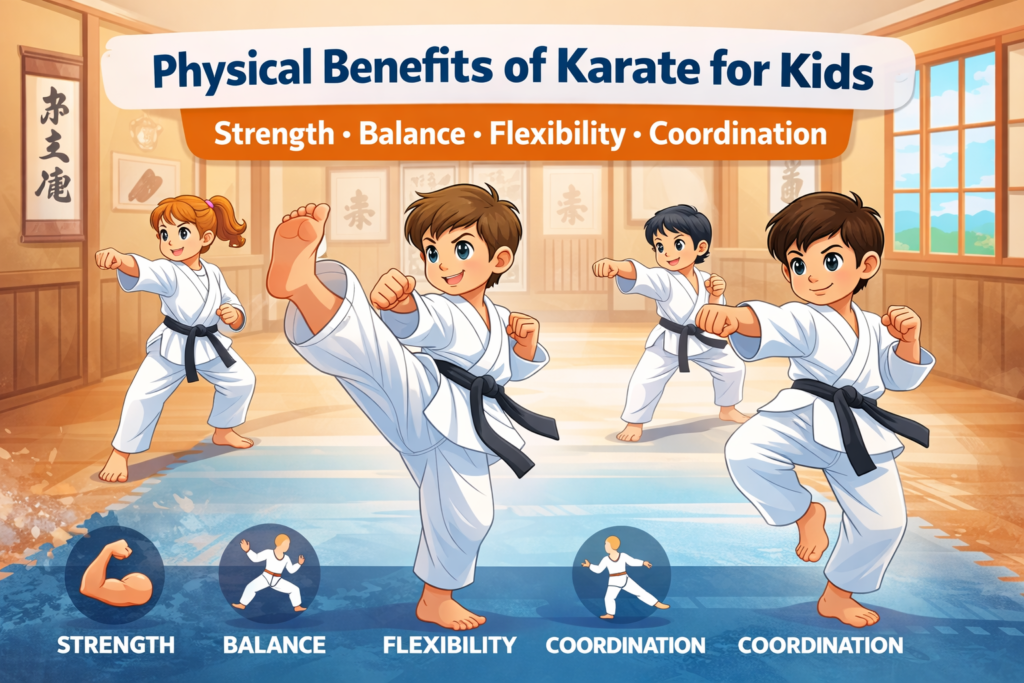
One of the most visible advantages of Karate training is improved physical fitness.
Karate classes involve a combination of movements such as punches, kicks, stances, blocks, and footwork drills. These exercises strengthen the entire body and improve coordination.
Improved Motor Skills and Coordination
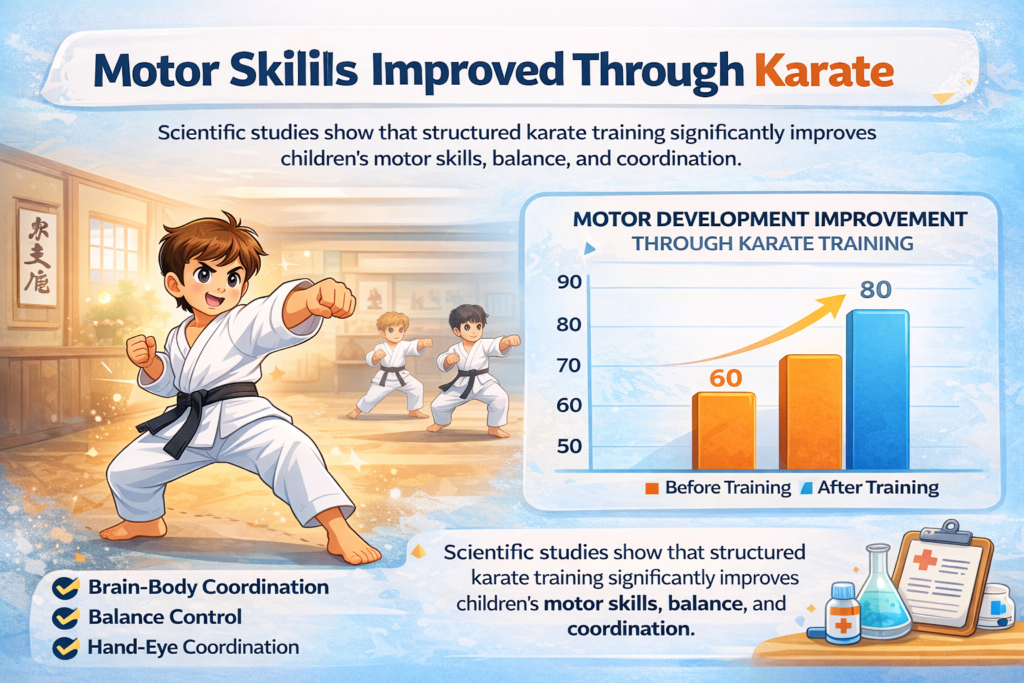
Karate training requires children to coordinate different parts of their bodies simultaneously. Hands, feet, hips, and torso must work together to perform techniques correctly.
Through continuous practice, children develop better:
- Body coordination
- Balance
- Movement control
These improvements help children perform better not only in Karate but also in sports and everyday activities.
Medical Highlights
1. Brain–Body Coordination
Karate techniques involve cross-body movements (right hand with left leg), which stimulate communication between the two hemispheres of the brain. This improves coordination and cognitive processing.
2. Neuromuscular Development
Repeated kicking, punching, and stance training strengthen the connection between the nervous system and muscles, improving reaction speed and movement accuracy.
3. Balance and Vestibular System
Karate stances and kicks challenge the vestibular system (balance system in the inner ear), helping children develop better posture and stability.
4. Hand–Eye Coordination
Blocking and striking drills train the brain to process visual cues quickly and respond with precise motor actions.
Strength and Endurance
Karate training includes many bodyweight exercises such as push-ups, squats, and stance training. These exercises build muscle strength and endurance gradually.
Children develop stronger:
- Leg muscles
- Core stability
- Upper body strength
Regular training also improves stamina and energy levels.
Flexibility and Injury Prevention
Stretching is an important part of Karate practice. Children perform flexibility exercises before and after training sessions.
Improved flexibility helps:
- Prevent injuries
- Improve posture
- Enhance athletic performance
Flexible muscles allow children to move more efficiently and safely.
Medical Evidence
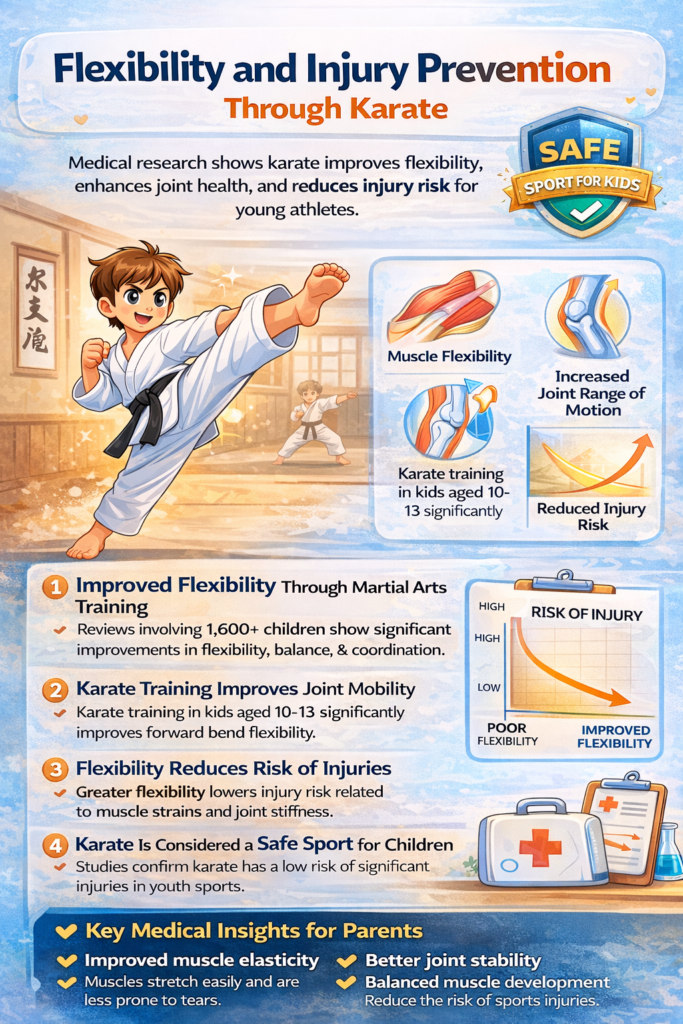
- Improved Flexibility Through Martial Arts Training
Scientific reviews of martial arts programs involving more than 1,600 children found that structured martial arts training significantly improves physical fitness parameters including flexibility, balance, coordination, and agility. - Karate Training Improves Joint Mobility and Flexibility
Research evaluating children aged 10–13 years who participated in karate-based training showed improvements in physical fitness tests including forward bend flexibility and agility after a structured training program. - Flexibility Reduces Risk of Sports Injuries
Medical research shows that restricted range of motion due to muscle tightness increases injury risk, while training programs that improve flexibility can help prevent injuries in children and adolescents. - Karate is Considered a Safe Sport for Children
Studies analyzing injury rates among young karate practitioners concluded that karate is relatively safe when properly supervised and taught, with a low risk of significant injury in youth training programs. - Stretching Improves Range of Motion and Reduces Injury Risk
Martial arts training often includes stretching and mobility exercises that increase joint range of motion and help reduce the likelihood of muscle injuries.
Medical Insight for Parents
Karate training protects children from injuries through three mechanisms:
- Improved muscle elasticity – muscles stretch more easily and are less prone to tears.
- Better joint stability – flexible muscles support joints and reduce stress on ligaments.
- Balanced muscle development – reduces imbalances that often cause sports injuries.
Key Takeaway
Regular Karate practice combines stretching, controlled movements, and balance training, which improves flexibility and helps protect children from common sports injuries such as muscle strains, ligament stress, and joint stiffness.
Cardiovascular Fitness
Karate training is physically demanding and increases heart rate during practice. This helps improve cardiovascular health.
Regular Karate practice supports:
- Healthy heart function
- Improved breathing capacity
- Reduced risk of childhood obesity
Children who train in Karate often develop healthier lifestyles and stronger physical habits.
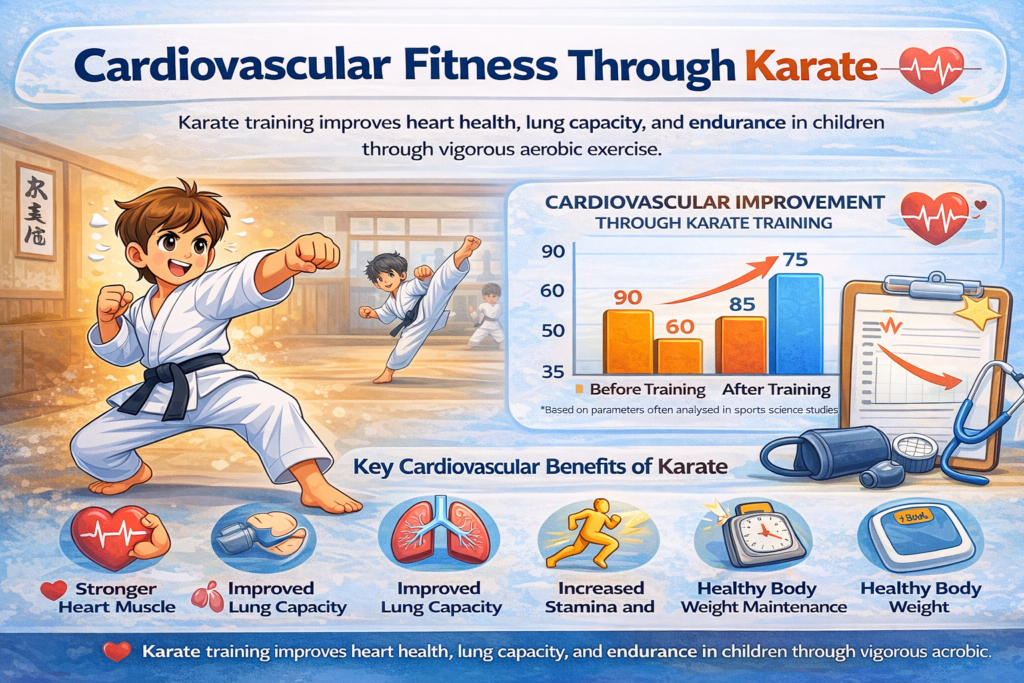
Cardiovascular Fitness Through Karate
Karate training is an effective form of aerobic exercise that improves cardiovascular health in children. The continuous movements involved in karate—such as kicking, punching, footwork drills, and sparring—raise the heart rate and strengthen the cardiovascular system.
Regular karate training helps improve heart efficiency, lung capacity, and blood circulation, which are essential for overall physical health and endurance.
Medical Evidence
1. Improved Cardiorespiratory Fitness
Studies on martial arts training in children show improvements in cardiorespiratory endurance, agility, and physical fitness among young practitioners.
2. Increased Heart Efficiency
Regular aerobic activity such as karate training helps the heart pump blood more efficiently, reducing the risk of cardiovascular problems later in life.
3. Improved Oxygen Utilization
Karate training enhances VO₂ max (maximum oxygen uptake), which indicates how efficiently the body uses oxygen during physical activity.
4. Reduced Risk of Childhood Obesity
Active martial arts programs help children maintain a healthy weight and reduce sedentary lifestyle risks.
Mental Benefits of Karate Training
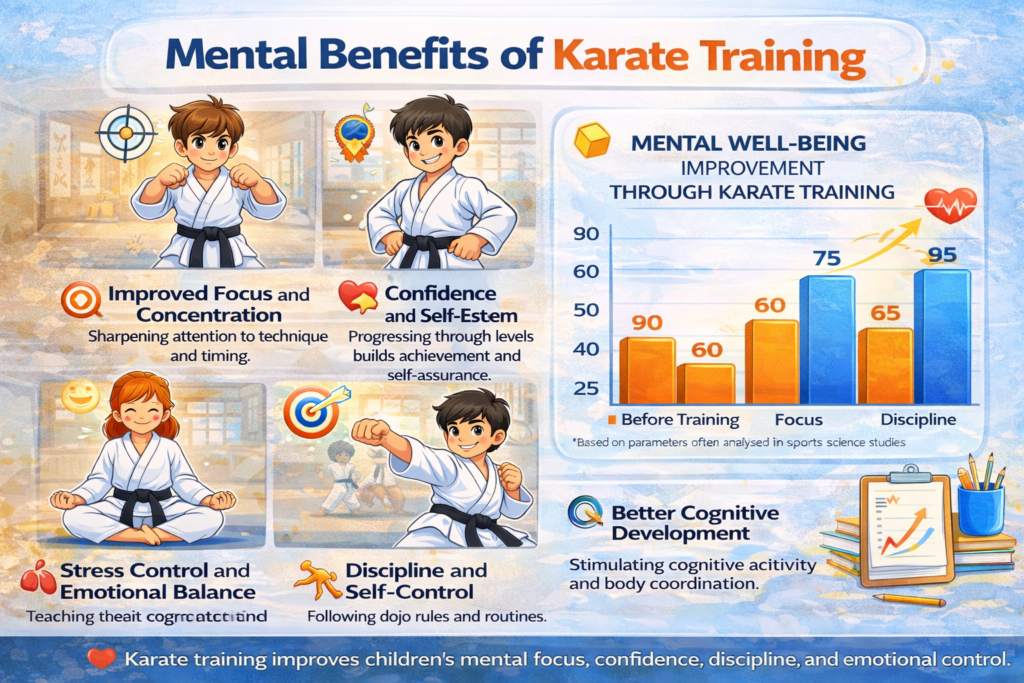
Karate is not only physical training—it is also a system that strengthens the mind.
Children must concentrate on movements, timing, and instructions from their instructor. This continuous mental engagement improves focus and discipline.
🧠 Improved Focus and Concentration
Karate requires attention to technique, timing, and movement, helping children sharpen their concentration skills.
💪 Confidence and Self-Esteem
As children progress through belt levels, they gain confidence in their abilities and develop a strong sense of achievement.
🧘 Stress Control and Emotional Balance
Karate training teaches breathing control, patience, and emotional regulation.
🎯 Discipline and Self-Control
Following dojo rules and training routines builds strong personal discipline.
🧩 Better Cognitive Development
Complex movement patterns stimulate brain activity and improve coordination between the brain and body.
Improved Focus and Concentration
Karate requires attention to detail. Students must concentrate on posture, balance, breathing, and technique.
Over time, this training improves a child’s ability to concentrate in school and complete tasks with greater focus.
Discipline and Self-Control
Karate training follows strict etiquette and structure. Students learn to respect instructors, follow rules, and maintain discipline during training.
This discipline often carries into daily life, improving behavior at home and school.
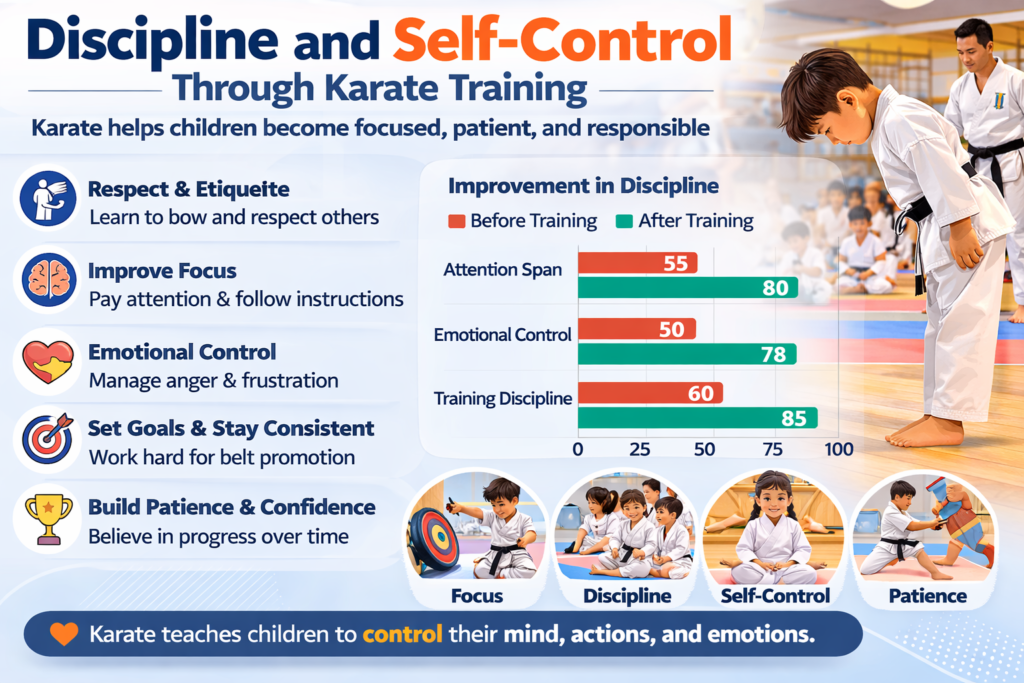
Karate training teaches children to control their emotions, follow instructions, and respect rules. The structured environment of the dojo encourages patience, concentration, and responsibility.
Children learn discipline through:
🥋 Dojo Etiquette – Bowing, respecting instructors and training partners.
🎯 Focus During Training – Listening carefully and practicing techniques correctly.
🧘 Emotional Control – Managing frustration and anger during training.
📈 Goal Setting – Working toward belt promotions through consistent practice.
Confidence and Self-Esteem
As children progress through belt levels, they gain a strong sense of achievement.
Each new technique learned and each belt earned builds confidence. Children begin to believe in their abilities and develop a positive self-image.
Stress Management
Children today face academic pressure, social challenges, and digital distractions.
Karate provides a healthy outlet for releasing stress. Through focused movement and breathing techniques, children learn how to manage emotions and remain calm under pressure.
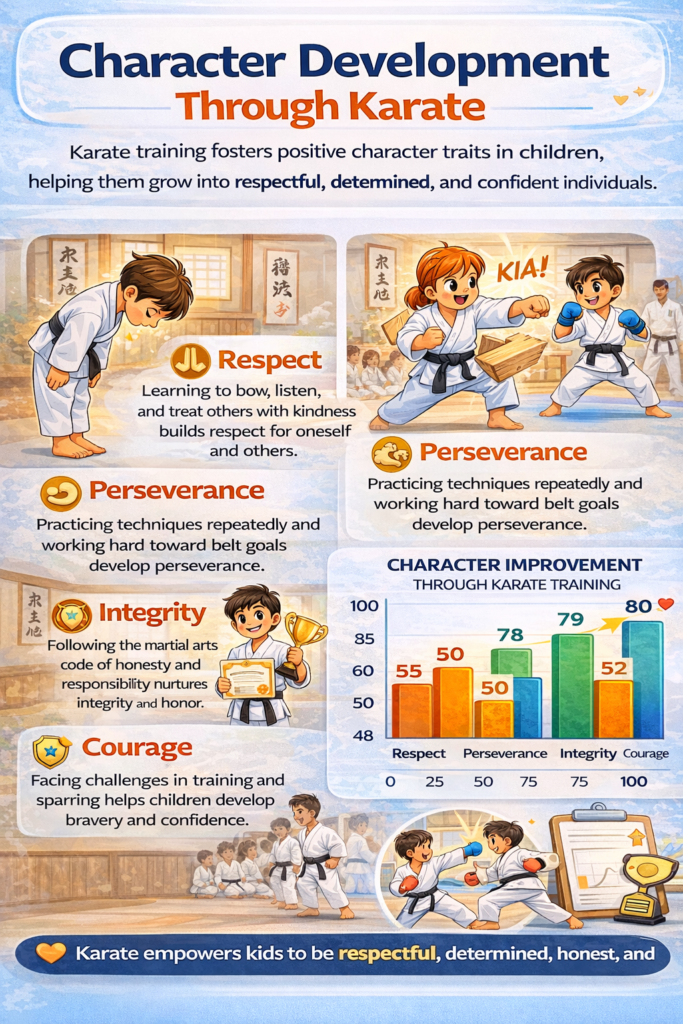
Character Development Through Karate
One of the greatest benefits of Karate for kids is the development of strong character.
Karate training emphasizes traditional values that shape a child’s personality and behavior.
Respect
Respect is a fundamental principle in Karate. Students bow to their instructors and training partners as a sign of courtesy.
This practice teaches children to respect teachers, parents, and peers.
Humility
Karate teaches students that learning never ends. Even advanced practitioners continue improving their techniques.
This encourages children to stay humble and open to learning.
Perseverance
Progress in Karate requires consistent practice. Students must work hard to master techniques and earn higher ranks.
Through this process, children learn the importance of persistence and dedication.
Self-Control
Karate emphasizes responsible use of martial arts skills. Children learn that Karate is not for aggression but for self-improvement and protection.
This teaches emotional control and responsible behavior.
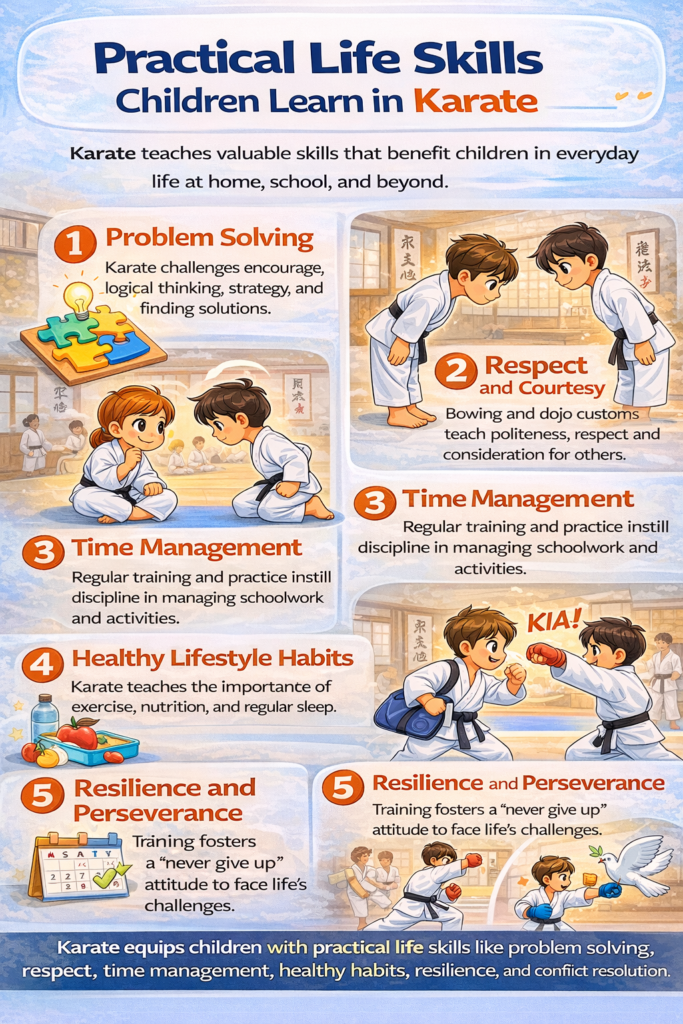
Practical Life Skills Children Learn in Karate
Karate training also prepares children with skills that help them navigate real-life challenges.
Self-Defense Awareness
Children learn basic self-defense techniques and situational awareness. This increases their confidence and personal safety.
Here are strong practical life skills developed through Karate training:
1. Goal Setting
Children learn to set clear goals such as earning the next belt rank. This teaches them the value of planning, persistence, and achieving milestones.
2. Time Management
Balancing schoolwork, homework, and karate training helps children develop strong time-management habits.
3. Leadership Skills
Senior students often assist instructors and help junior students. This builds responsibility and leadership qualities.
4. Decision-Making Ability
During sparring and drills, children must react quickly and make decisions under pressure.
5. Situational Awareness
Karate training increases awareness of surroundings and teaches children how to stay alert and safe.
6. Conflict Resolution
Children learn to avoid unnecessary fights and resolve conflicts calmly and respectfully.
7. Resilience and Problem Solving
When techniques are difficult to master, children learn to keep trying and find ways to improve.
8. Teamwork and Cooperation
Even though karate can be an individual sport, training often involves partner drills and group practice that promote teamwork.
9. Healthy Lifestyle Habits
Karate encourages physical fitness, proper nutrition, and active living.
10. Responsibility and Accountability
Students learn to take responsibility for their progress, behavior, and improvement.
11. Public Confidence
Participating in belt tests, demonstrations, and competitions helps children become comfortable performing in front of others.
12. Respect for Rules and Structure
Karate teaches children to follow rules and respect structured environments, which helps them in school and future careers.
Bullying Prevention
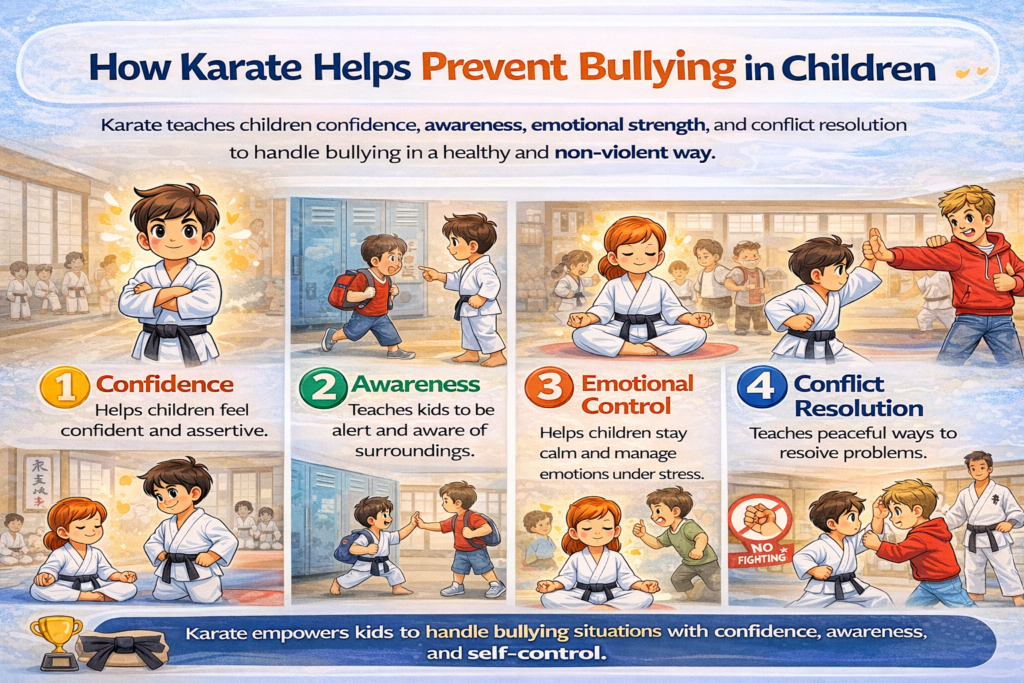
Karate training helps children deal with bullying situations calmly and confidently. They learn how to respond assertively without escalating conflict.
Bullying is a growing concern in schools and social environments. Many children experience bullying at some stage of their childhood, which can negatively affect their confidence, emotional well-being, and academic performance. Karate training plays an important role in helping children develop the confidence and awareness needed to handle bullying situations in a healthy and responsible manner.
Karate does not teach children to fight or become aggressive. Instead, it teaches self-control, confidence, awareness, and respect for others, which are powerful tools in preventing bullying situations.
Building Confidence to Stand Up Against Bullying
One of the most effective ways to prevent bullying is confidence. Children who practice Karate often develop a strong sense of self-belief. Their posture, body language, and communication become more confident, which can discourage bullies who often target children they perceive as weak or timid.
When children feel confident in themselves, they are more likely to:
- Speak up when treated unfairly
- Stand up for themselves and others
- Seek help from teachers or parents
Developing Situational Awareness
Karate training teaches children to be aware of their surroundings and recognize potentially dangerous situations early. This awareness helps children avoid confrontations and stay safe in different environments such as school playgrounds, public places, or social gatherings.
Children learn to:
- Observe their surroundings carefully
- Maintain safe distance in threatening situations
- Recognize early warning signs of bullying
Learning Non-Violent Conflict Resolution
Traditional Karate philosophy emphasizes peace, respect, and self-control. Children are taught that martial arts skills should only be used as a last resort for self-defense.
Through Karate training, children learn how to:
- Stay calm in stressful situations
- Use words instead of violence
- Walk away from unnecessary conflicts
This approach encourages children to handle difficult situations with maturity and responsibility.
Building Emotional Strength and Resilience
Karate training helps children develop mental resilience. Through disciplined practice and overcoming challenges, children become emotionally stronger and less affected by negative behavior from others.
This resilience helps children:
- Handle criticism or teasing more confidently
- Recover quickly from emotional stress
- Maintain a positive self-image
Self-Defense Skills as a Last Resort
While Karate focuses primarily on discipline and character development, it also equips children with basic self-defense skills. Knowing how to protect themselves can give children a sense of security.
However, instructors emphasize that self-defense should only be used when necessary and in a responsible manner.
Creating a Supportive Social Environment
Karate classes often create a strong sense of community. Children train together, support each other, and build friendships. This positive environment helps children feel accepted and valued, reducing feelings of isolation that can sometimes make children vulnerable to bullying.
Key Takeaway for Parents
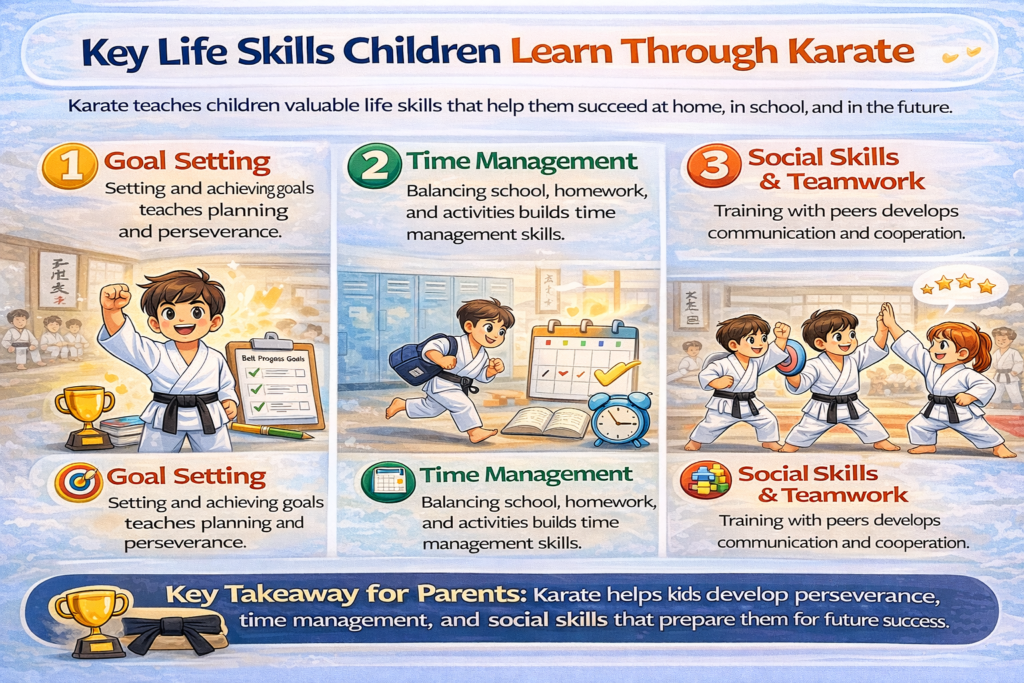
Karate helps children develop the confidence, awareness, discipline, and emotional strength needed to prevent bullying situations. Instead of encouraging aggression, it teaches children how to stay calm, act responsibly, and protect themselves when necessary.
Social Skills and Teamwork
Karate classes bring children together in a structured group environment. Training alongside peers helps develop friendships and teamwork.
Goal Setting
The belt system in Karate teaches children to set goals and work towards achieving them.
Each promotion motivates them to practice harder and stay committed.
Time Management
Balancing school, Karate practice, and other activities teaches children valuable time-management skills.
A Transformational Journey for Children
For many children, Karate becomes a life-changing journey.
Shy children gain confidence.
Energetic children learn discipline.
Children struggling with focus develop concentration and determination.
Karate provides a safe and supportive environment where children discover their potential and build lifelong skills.
Karate is more than just a martial art. It is a powerful system for developing physical strength, mental discipline, and strong character.
For parents seeking a meaningful activity that supports their child’s growth, Karate offers a complete path toward confidence, resilience, and personal success.
Introducing your child to Karate is not simply enrolling them in a sport—it is giving them the opportunity to develop the skills, discipline, and mindset needed to face life’s challenges with courage and confidence.








Leave a Reply