

“Know the Legend — Stories Behind the Masters Who Shape the Game.”
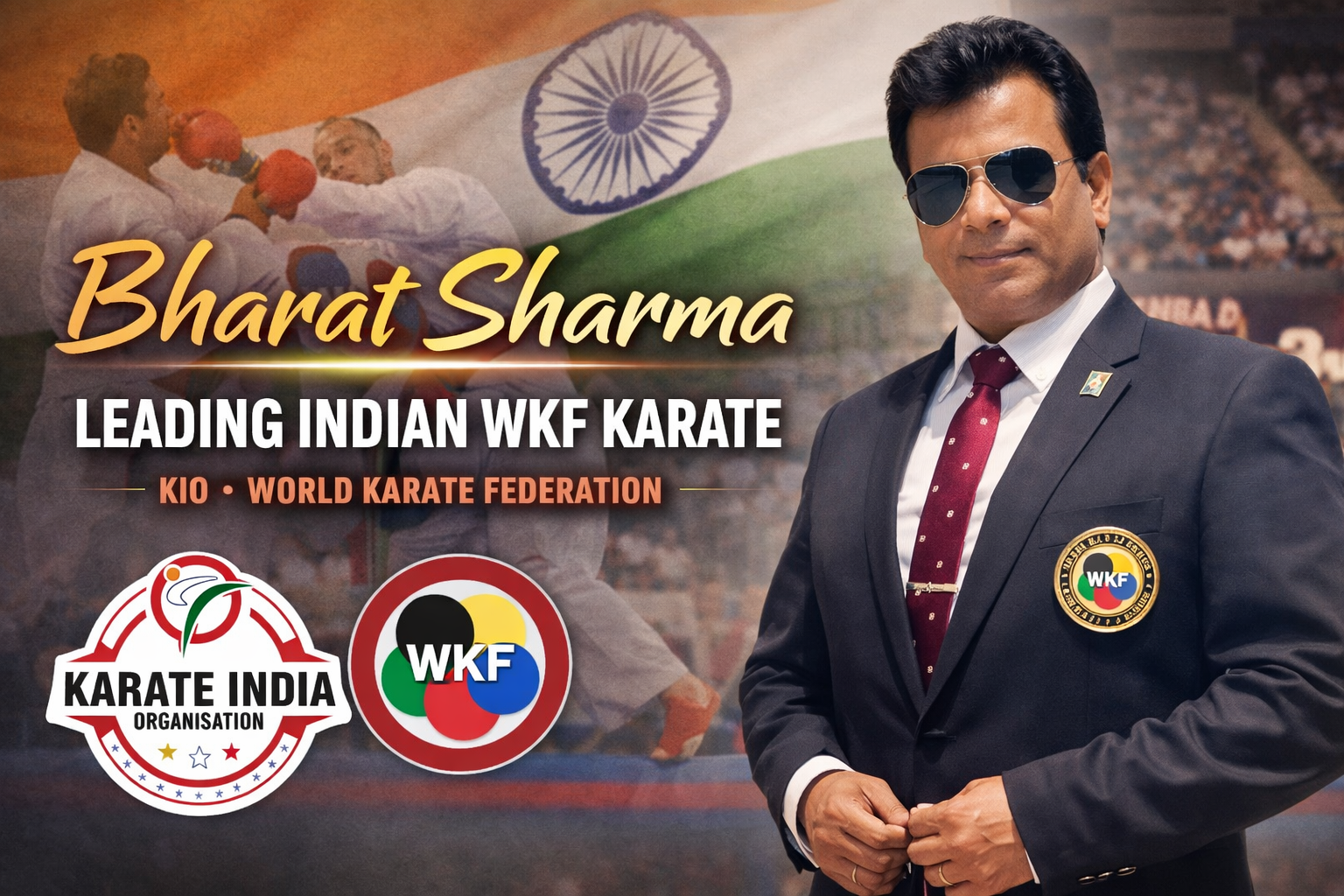
“Bharat Sharma
— The Architect of India’s WKF Karate Era.”
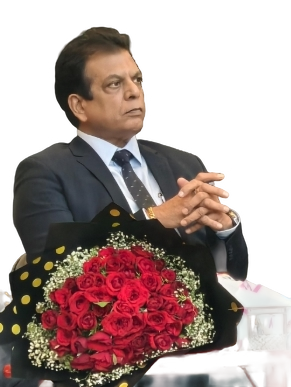
In the evolving landscape of Indian karate, few administrators have played as pivotal a role in the WKF ecosystem as Shihan Bharat Sharma. Known for his administrative acumen, technical expertise, and international networking, Sharma has emerged as one of the most influential figures in the governance and development of Olympic-style karate in India.
His journey spans decades of involvement in refereeing, technical education, and organizational leadership—culminating in his election as President of the Karate India Organisation (KIO), the official Indian member federation of the World Karate Federation (WKF).
This detailed blog explores his rise, responsibilities, international roles, and impact on the Indian karate ecosystem.
Early Involvement in Karate Administration
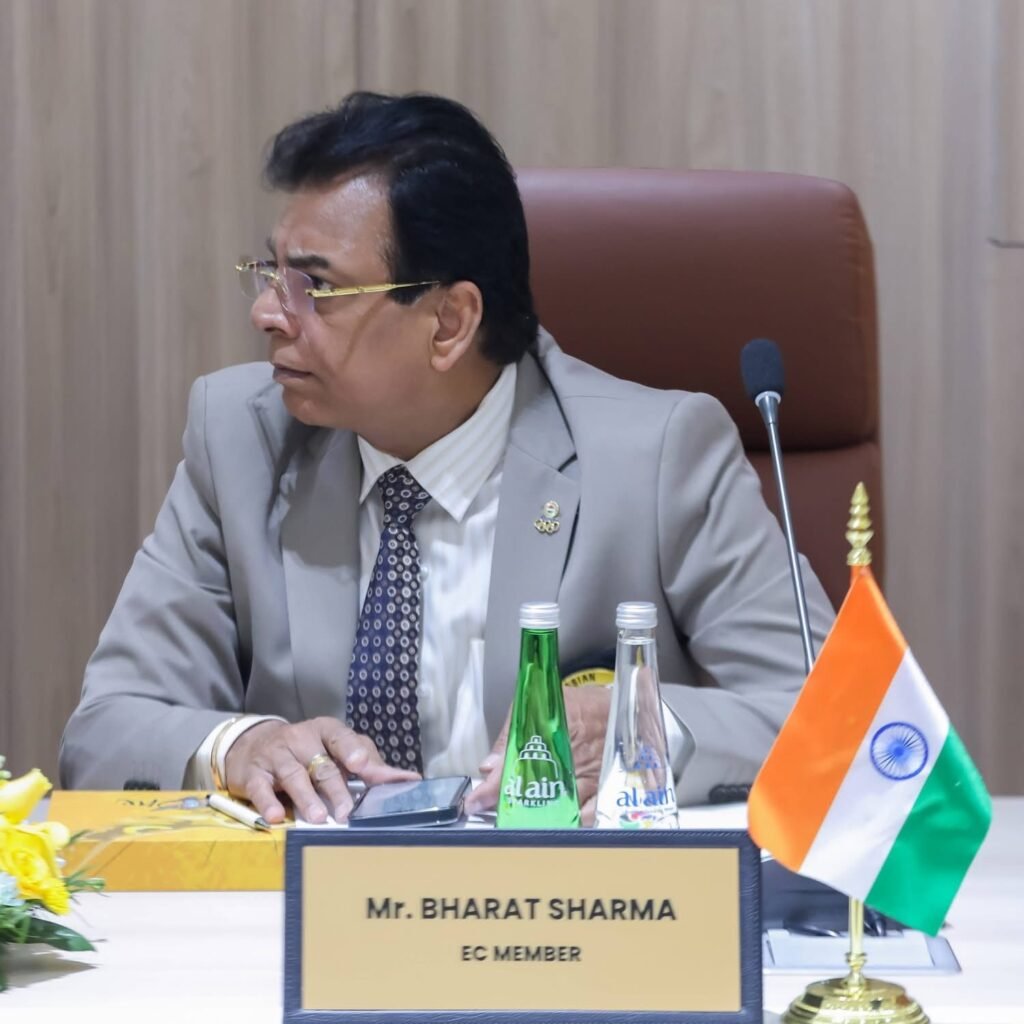
Before reaching the top administrative position in India’s WKF structure, Bharat Sharma built his reputation through sustained work in technical officiating, referee education, competition management, and international exposure. He became widely recognized in karate circles as a disciplined WKF referee and a technically sound authority on competition matters. Over time, his role gradually expanded from tatami officiating to broader governance and organizational responsibilities.
His strong technical grounding earned him credibility across the karate ecosystem, including among coaches, athletes, referees, and state associations. This cross-sectional trust base later proved crucial as he moved into higher administrative leadership, allowing him to operate with both technical legitimacy and institutional acceptance.
Rise within the WKF Ecosystem
Bharat Sharma’s international standing grew significantly through his work as a WKF-linked referee and judge. His officiating portfolio includes assignments at the Asian Karate Championships, Commonwealth Karate events, WKF international competitions, and major national championships in India. Through these roles, he developed a reputation for consistency and rule-based decision-making on the tatami.
His key areas of focus have included rule standardization, referee mentoring, technical accuracy, and the enforcement of fair play principles. Because WKF competition karate is highly technical and deeply governed by standardized rules, experienced referees often evolve into influential voices in policy and structural matters. This dynamic played an important role in strengthening Sharma’s credibility and visibility within the global WKF framework.
Leadership of Karate India Organisation (KIO)
In 2024, Bharat Sharma was unanimously elected President of the Karate India Organisation (KIO), marking a significant milestone in the governance of Indian WKF karate. This leadership transition came at a particularly important time for the sport in India. As the sole WKF-recognized national federation for the country, KIO carries the responsibility of representing India internationally, conducting national championships, and selecting athletes for participation in World Karate Federation (WKF) events. Sharma’s presidency therefore began during a critical rebuilding phase following India’s federation transition in 2021, placing him at the center of efforts to stabilize and strengthen the national karate framework.
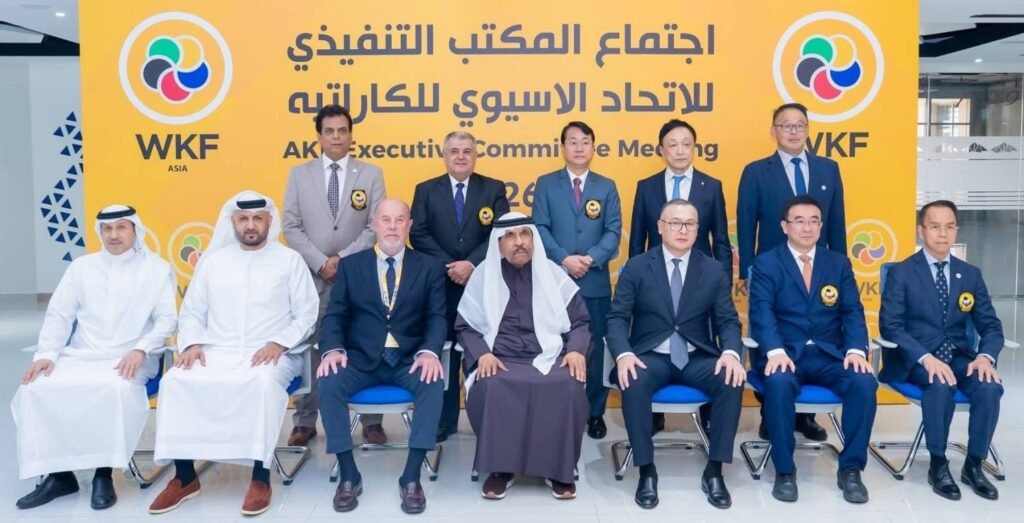
Beyond his national responsibilities, Bharat Sharma’s influence extends into the continental and regional karate structure. He serves, or has served, as an Executive Council Member of the Asian Karate Federation (AKF), where he contributes to policy discussions and works toward aligning Indian karate with broader Asian standards. His reported role as Vice President of the Commonwealth Karate Federation (CKF) further reflects his involvement in Commonwealth-level development initiatives. Additionally, as President of the South Asian Karate Federation (SAKF), he has focused on strengthening regional cooperation and competitive opportunities within South Asia. Collectively, these positions significantly amplify Sharma’s influence within the wider WKF ecosystem and enhance India’s voice in international karate governance.
Strategic Engagement with WKF Leadership
A notable development during Bharat Sharma’s tenure has been his active engagement with the headquarters of the World Karate Federation (WKF). These interactions have reportedly focused on strengthening India’s WKF structure, increasing Indian participation in international competitions, improving referee standards, and exploring the possibility of hosting major international events in India. WKF leadership has repeatedly identified India as a high-potential growth market, which makes Sharma’s role strategically significant in the global karate landscape.
The Post-2021 Transition Era
To fully understand Bharat Sharma’s importance, it is necessary to consider the historical context of Indian WKF karate. India previously operated under another WKF-recognized body, but following governance challenges, WKF granted permanent recognition to the Karate India Organisation (KIO) in 2021. This marked the beginning of a rebuilding phase for WKF karate in the country. Sharma’s presidency comes during this sensitive consolidation period, where the focus has been on stabilizing and strengthening the national structure.
This phase has not been without challenges. Key tasks have included reunifying state associations, standardizing technical structures, rebuilding international confidence, expanding the athlete pipeline, and managing internal factional dynamics. Addressing these complex issues requires not only technical credibility but also careful political balance and administrative experience.
Technical Philosophy and Approach
Within the karate community, Bharat Sharma’s approach is often associated with strict adherence to WKF rules and protocols. He is known for emphasizing referee education, structured competition systems, international alignment, and a more centralized administrative framework. His long background as an international referee clearly influences his governance style, particularly in areas such as match procedures, judging standards, and overall competition discipline. This technical orientation has shaped many of the policy directions seen during his leadership phase.
Impact on Indian Karate
Supporters of the current administration credit this period with several positive developments. These include increased Indian participation in WKF events, greater activity in referee certification programs, stronger engagement at the continental level, improved organizational visibility, and the expansion of national-level competitions. Such developments suggest a period of structural consolidation and outward growth.
At the same time, as with any national sports federation, certain areas continue to be closely watched. These include the depth of grassroots development, consistent international medal performance, deeper state-level integration, transparency and governance standards, and the long-term strengthening of India’s Olympic pathway in karate. The coming years will be critical in determining how effectively current policies translate into sustained competitive success.
Reputation in the Karate Community
Within WKF-style karate circles in India, Bharat Sharma is generally regarded as a senior technical authority and an internationally connected administrator. He is also widely viewed as a disciplined referee and one of the key power figures in the present WKF structure in India. Nevertheless, like many federation leaders in competitive sport, his tenure operates within a complex ecosystem shaped by expectations, regional dynamics, and performance pressures.
Today, Shihan Bharat Sharma stands as one of the central figures influencing the trajectory of WKF karate in India. From his beginnings as an international referee to his current role as President of the Karate India Organisation, his journey reflects the growing professionalization of karate governance in the country. His leadership arrives at a pivotal moment—when India possesses both the population strength and institutional recognition to emerge as a major force in world karate. Whether this potential is fully realized will depend largely on how effectively the present administrative vision converts into athlete success and deep grassroots expansion. For now, Bharat Sharma remains a key architect of India’s modern WKF karate framework, with the coming years set to define the lasting impact of his tenure.





Leave a Reply